01
Janitorial Services
Recurring cleaning for floors, restrooms, and shared business interiors.
View Janitorial Services
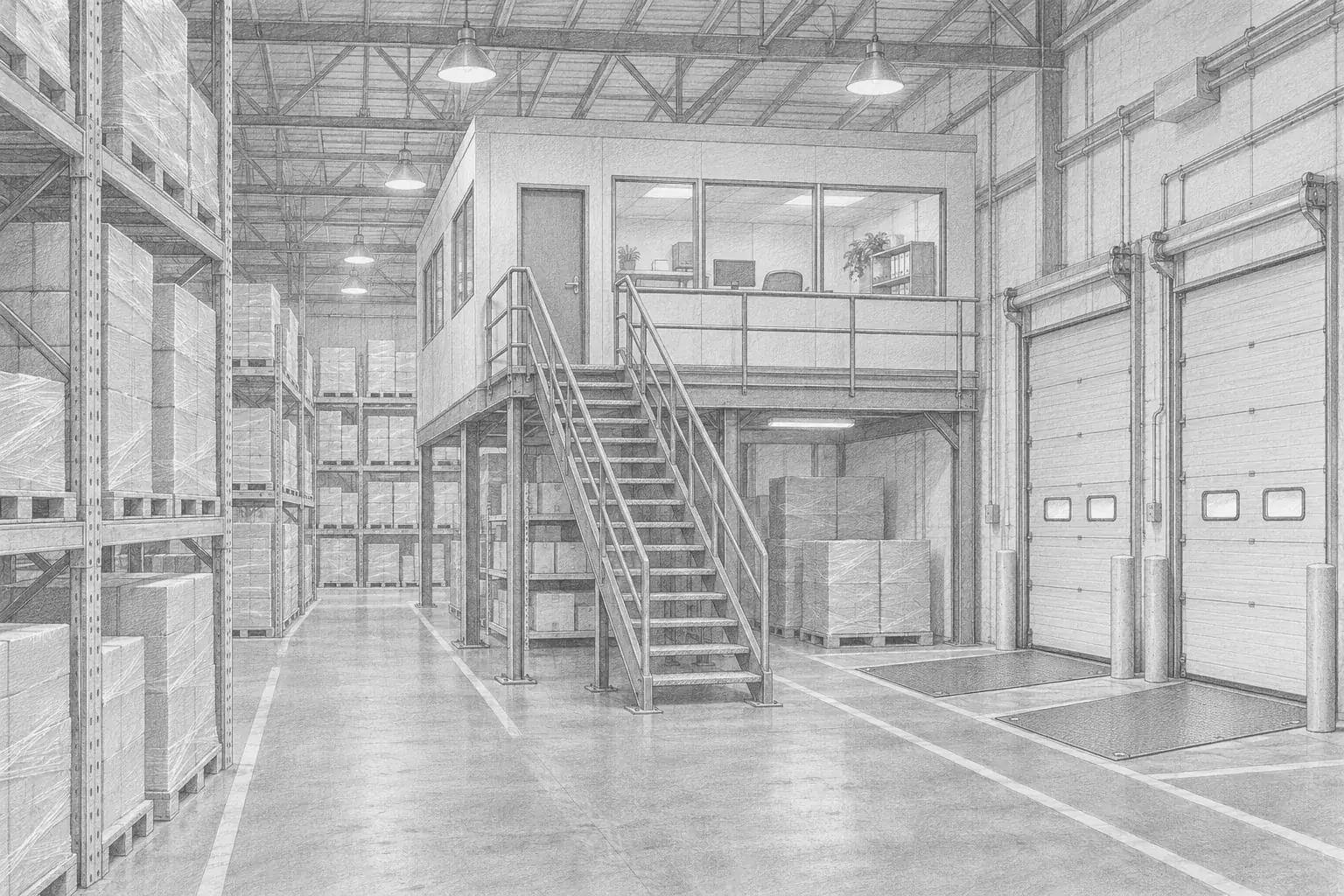
Warehouse and industrial cleaning across Northern California and Nevada for distribution buildings, plants and their employee facilities. Loom Janitorial scrubs the floors, high-dusts overhead and cleans docks, offices, breakrooms and restrooms.
We clean warehouse floor areas and the routes between storage, shipping, and receiving zones. Entrances and dock-adjacent spaces receive attention under the facility’s traffic and safety procedures.
Industrial properties also have offices and staff facilities. Restroom cleaning, breakroom care, and waste collection extend recurring janitorial service beyond the main warehouse floor.
Concrete scrubbing treats surface soil on compatible commercial floors. The condition of the slab and any coating determine the method.
We clean equipment exteriors under the customer’s operating and safety protocols.
Loom serves warehouse and distribution buildings in Stockton, Fernley, Sparks, Galt, Hayward and Carson City.
In a warehouse or plant, we clean floor routes and dock-adjacent areas under the facility’s traffic rules, then carry on into the offices, breakrooms and restrooms that shift workers rely on. Concrete scrubbing can be added as a periodic treatment wherever the slab and its coating suit it.
Open warehouse floors are scrubbed by machine. Ride-on scrubbers cover the long aisles and staging lanes, and walk-behind units work the tighter ground: racking edges, the apron inside each dock door and the corridors that lead into the offices. Each pass lays down solution, scrubs the concrete and picks up the dirty water, so the floor goes back into service soon after the machine moves on. Periodic treatments are on our commercial floor care page.
Overhead, dust gathers on rafters, beams, the tops of racking, ductwork and light fixtures long before anyone notices it from the floor. High dusting works from lifts on a periodic schedule, in a window when the aisles below can be cleared or the stock beneath them covered, so nothing that comes down lands on product waiting to ship.
Docks and loading areas take the dirt that arrives with every trailer. Crews sweep and scrub the dock floor, clear the debris that gathers around levelers and door tracks, wipe dock doors and frames, and clean the shipping and receiving offices beside them, all under your yard and forklift safety rules.
A recurring warehouse plan usually carries these lines, each with its own interval:
Not every part of an industrial building wears at the same rate. Staff restrooms and breakrooms take use on every shift and belong on each visit. Main floor routes and dock-side entrances follow the volume of freight moving through, while low-traffic storage aisles hold up on a lighter rotation.
Periodic work sits on its own line. Concrete scrubbing, office carpet extraction and floor finish projects are scheduled when the surfaces need them, not on every visit. Writing each area, task and interval into a room-by-room task list keeps those choices visible.
Plants and distribution centers that run around several shifts do not stay clean between evening visits. A day porter covers the gap, checking restrooms and restocking soap and paper, wiping breakroom tables between lunch breaks, and clearing small spills in shared areas before they spread.
The porter works from a short daytime list, so the full clean of offices, restrooms and floors stays with the recurring crew. Shift leads know which tasks are covered during production and which ones wait for the scheduled visit.
Industrial cleaning is priced per square foot each month on the area the crew actually cleans: offices, breakrooms, locker rooms, restrooms and the floor zones you list, not every foot under the roof. As of 2026, published market rates for that work typically run $0.08 to $0.22, starting from the Fernley and Sparks corridor and climbing to Silicon Valley R&D buildings. Light single-shift buildings start near $0.06, and multi-shift programs with heavy soil reach $0.38.
Take a Stockton distribution building where 14,000 square feet of dock offices, two breakrooms, locker rooms and restrooms are cleaned every weekday at $0.11. That program costs $1,540 a month. A building that needs those rooms reset after a second shift adds a visit and raises the total, and one with a single shift and a small front office lowers it.
Shift count leads the list, since breakrooms and restrooms shared by every crew need attention more than once a day in a busy building. Dock dust tracked into offices, shower rooms in locker areas, long walks between rooms on a large footprint and gate or escort rules all add labor. Periodic concrete scrubbing on compatible floors is priced as its own project, and so is daytime porter coverage. Loom walks the route with your facilities lead, times visits to your shift changes and returns a quote.
Walk the dock lanes and staff rooms with us. Point out where grit piles up and when forklift traffic stops, and the quote is built on the hours crews can actually work.
Yes. Loom cleans warehouse floors and adjoining offices, with tasks suited to industrial surfaces and staff spaces.
We clean dock-side floors and entries between truck moves, following your yard safety rules.
Recurring cleaning handles routine floor soil. Scrubbing provides a separate treatment for compatible concrete where the surface condition calls for it.
Yes. Visits to warehouse support areas can be planned between or after shifts so production and shipping keep moving.
Forklift routes and dock lanes carry the most frequent rotation, and quiet storage aisles a lighter one. Each zone’s interval is written into the plan at the walkthrough, so busy lanes never wait on the slow ones.
Yes. Crews on lifts dust the beams, rafters, ducts, light housings and racking tops as periodic work, timed for a window when the aisles below are clear or the stock is covered.
Yes. Offices, breakrooms and restrooms in a plant receive their own recurring task list alongside the floor and dock-area work.
Yes. A porter handles restrooms, supplies, breakrooms and small spills during working shifts, between the recurring visits.
List the building zones, shift times, slab type and coating, dock-area safety rules and any equipment exteriors you want included.
Services
Resources
Explore commercial floor care and food processing plant cleaning. See how to list the tasks for each room, or find cleaning by industry.
01
Recurring cleaning for floors, restrooms, and shared business interiors.
View Janitorial Services02
Cleaning for mixed-use business interiors.
View Commercial Cleaning03
Cleaning for workstations, shared rooms, and restrooms.
View Office Cleaning04
Daytime attention for selected common areas and routine tasks.
View Day Porter Services