
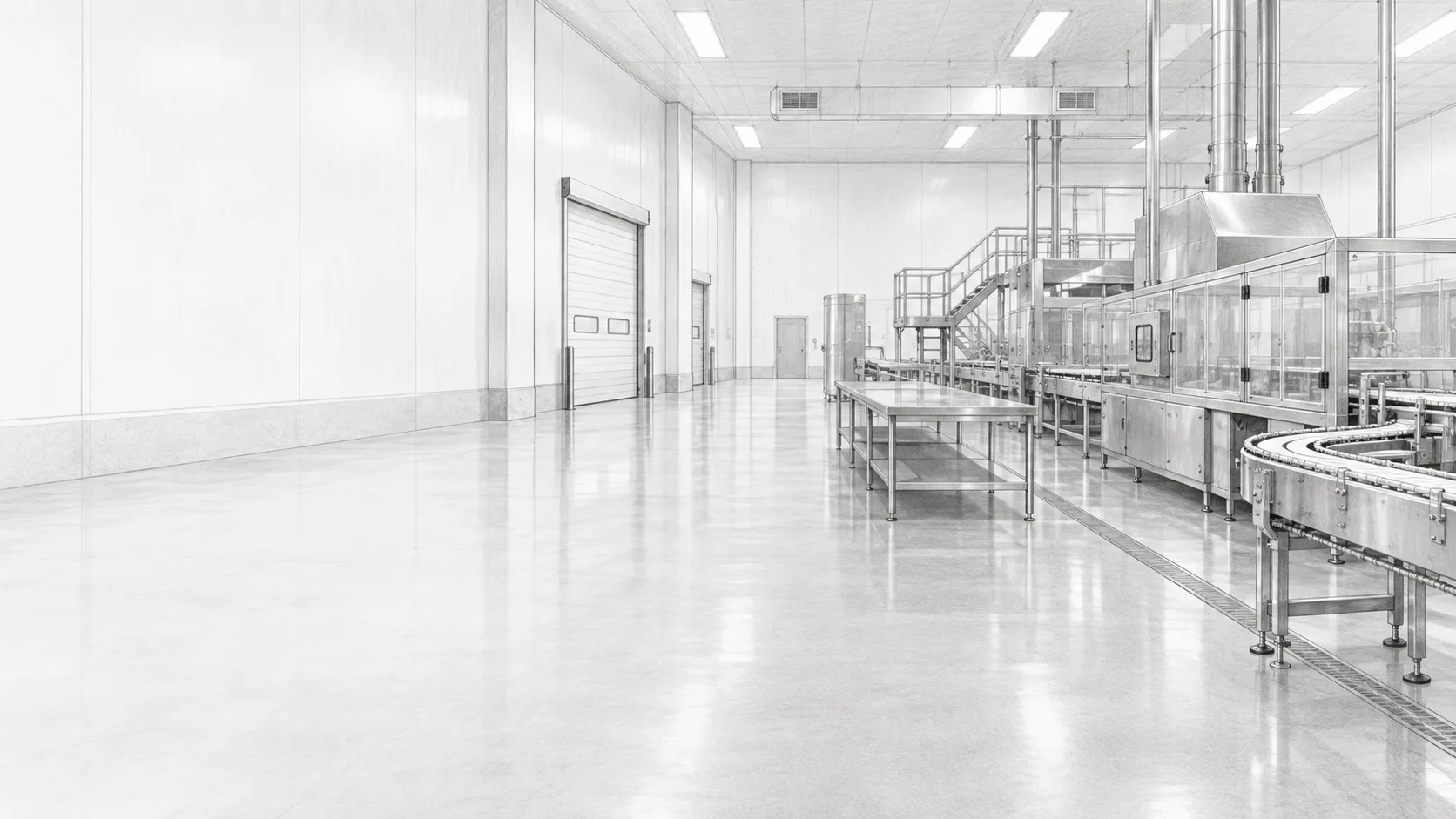
Food Processing Plant and Packing House Cleaning
Loom Janitorial cleans food and beverage plants, from food-contact surfaces and production lines to locker rooms and offices, following your sanitation SOPs, products and sequence.
Printable checklist
Processing rooms and building interiors
We clean processing-room surfaces, storage areas, and connecting corridors. Offices, staff breakrooms, and restrooms receive routine facility cleaning alongside production-area work.
Crews work around shifts and sanitation windows, with wet floors squeegeed and drains cleared before the next run.
Non-food-contact surfaces
Floors and equipment exteriors get their own methods, separate from food-contact work.
Food producers in Fairfield and Fresno
Food and beverage production is part of the manufacturing base in Fairfield, and food businesses work alongside logistics and manufacturing in Fresno. Plants in both cities pair production-area sanitation with routine cleaning of the offices, breakrooms and restrooms their teams use every shift.
Agricultural packers have similar needs in a different setting. The greenhouse and agricultural facility service covers packing areas, cold storage and food-contact surfaces under the site’s procedures, which makes it a natural companion for growers who pack their own product.
Packing houses and cold storage
Food operations reach well past the processing room. Packing houses that sort, wash and box produce, and the coolers and freezers that hold product before it ships, share the same buildings and the same crews. Loom cleans packing-hall floors and the ground around each station, cold-room aisles and loading doors, and the break areas and restrooms every shift uses, on one plan with the processing areas.
Each room runs on the facility’s sanitation schedule. Crews arrive for the windows the plant sets, work in the order its procedures list and use the products it approves, so a cold room or a packing line is cleaned when it is free rather than when it is busy. Cold-storage docks and the warehouse beside them are handled the way our warehouse and industrial cleaning page describes.
Food plants across the valley and the coast
In Modesto, Salinas and Hayward, food plants pair production rooms and cold storage with offices and staff rooms, and each area gets its own task list.
In the East Bay, Hayward mixes food production buildings with warehouses and distribution. Plants like these need production-area sanitation and routine cleaning of the offices, breakrooms, locker rooms and restrooms their crews use.
Keeping production sanitation apart from facility cleaning
Our crews sanitize food-contact surfaces and production equipment and never substitute their own products or sequence.
Offices, breakrooms, restrooms and locker rooms run on a separate recurring schedule, timed between shifts so each crew finds clean support rooms. Production-area work is scheduled into the sanitation windows the plant sets after runs, keeping the two kinds of work from competing for the same hours.
What a food plant should share before a quote
Send the sanitation procedures for the production areas, the list of surfaces and equipment they cover, and the production schedule with its sanitation windows. Add any waste-handling rules for production and storage, and the floor materials in each area, corridors included.
List the staff rooms as well, with shift times, so the routine facility cleaning can be planned at the same time.
Food plant cleaning costs and the office comparison
Food processing plants price above office space, and each plant is priced from its own production schedule; the 2026 office rates in our pricing guide are only the starting point for the support rooms. The offices, breakrooms, locker rooms and restrooms that support production clean much like an office, though every shift shares them. Processing-room sanitation is slower, more detailed work, quoted apart from facility cleaning.
Take a Fairfield beverage plant with 8,000 square feet of employee areas: two breakrooms, men’s and women’s locker rooms, restrooms and a front office. Cleaned on a weekday schedule timed to shift changes at $0.22, those rooms cost $1,760 a month. Production-area sanitation is quoted separately from the hours and steps in the plant’s procedures. Shift count, gowning and entry rules, wet floors and shutdown weeks that call for deeper work all move the total. A walkthrough with your sanitation lead sets both parts.
A few useful answers
Frequently asked questions
Can food-contact surfaces and production equipment be cleaned?
Yes. Our crews clean and sanitize food-contact surfaces and production lines as well as the rest of the plant.
Who sets the products and the cleaning sequence?
Your sanitation SOPs do, and our crews follow them.
Are floors and equipment exteriors treated the same as food-contact surfaces?
No. They get their own products and methods, apart from food-contact sanitation.
Can staff rooms and offices be cleaned alongside production areas?
Yes. Facility cleaning covers offices, employee rooms, restrooms, storage areas, and corridors alongside processing rooms.
Can you clean wet production floors between shifts?
Yes. Production floors are scrubbed, squeegeed and drained between shifts so the next crew starts on a clean floor.
Do you clean packing houses and cold storage rooms?
Yes. Packing halls, cooler and freezer aisles, loading doors and the staff rooms beside them are cleaned on the facility’s sanitation schedule, alongside the processing areas.
Can cleaning follow a seasonal packing schedule?
Yes. Visit days rise for peak packing weeks and drop back afterward, and every visit is booked into the windows the facility’s sanitation schedule sets.
Does Loom provide sanitation crews for food plants?
Yes. Production-area cleaning and sanitation run alongside recurring cleaning of offices, breakrooms and restrooms.
Can production line cleaning be scheduled between runs?
Yes. Production-area work is booked into the sanitation windows the plant sets, while staff rooms are cleaned around shift changes.
Industries
Related industries
Resources