
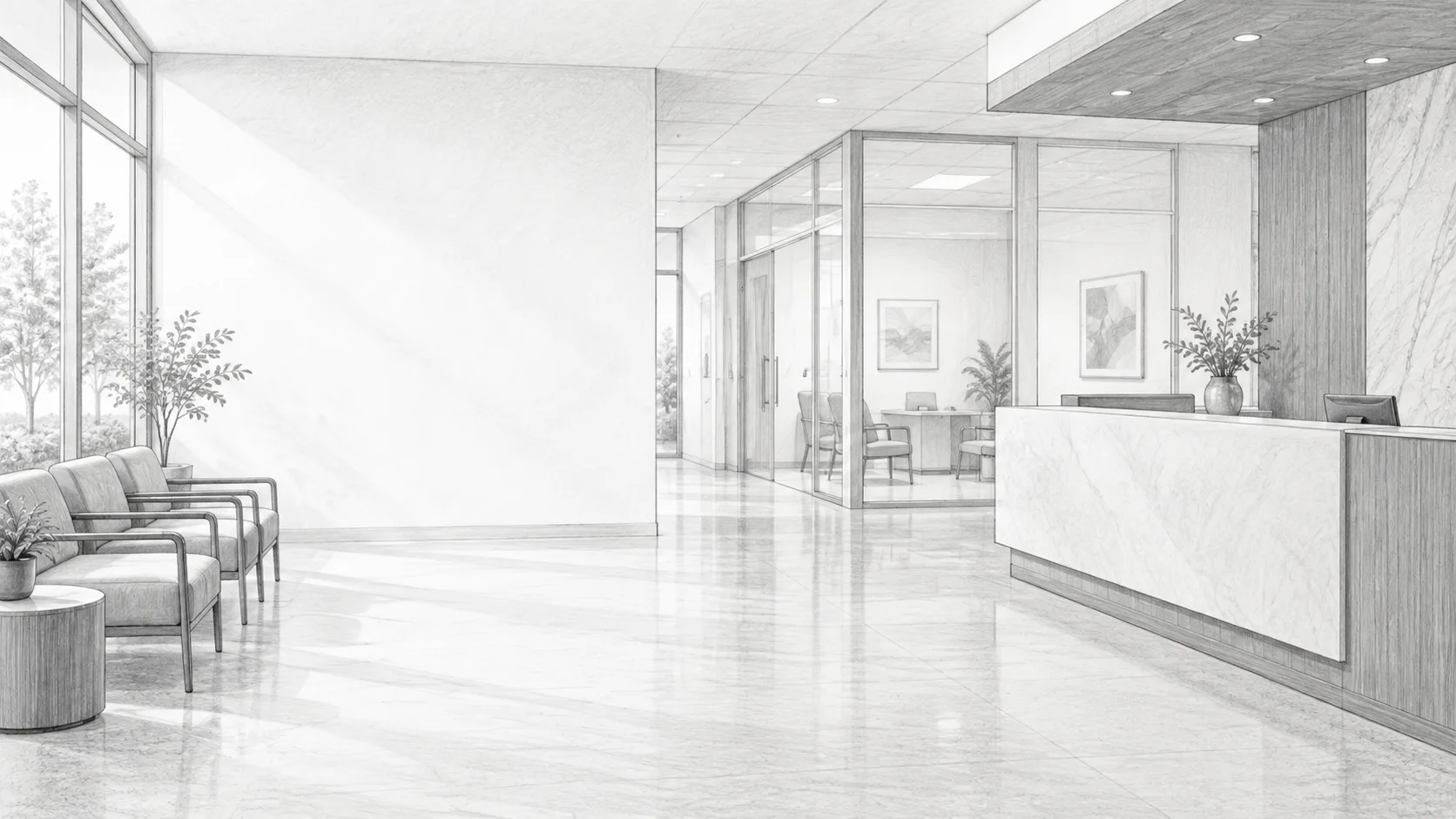
- Medical Office Cleaning for Planned Facility Areas
Medical Office Cleaning for Planned Facility Areas
Loom Janitorial provides medical office cleaning for accessible common areas and planned clinical care areas. A quote distinguishes the rooms, tasks, access conditions, and facility protocols that apply to each part of the office.
Accessible Common Areas That May Be Included
Accessible waiting and reception areas, offices, staff areas, restrooms, and corridors may be included in commercial cleaning. Operating hours and occupancy conditions help plan the requested service for each accessible area.
Describe Floors That Need Periodic Care
For periodic floor care, identify the flooring material and its current condition. Access constraints, occupancy concerns, and customer requirements determine which method fits the specific surface. A general quote does not promise a floor care method before compatibility with the identified material is established.
Set Boundaries for Clinical Care Areas
Clinical care areas are listed separately by room and task. Access, occupancy, specified products, sequencing, and safety instructions must follow customer protocols for each included area. General medical office cleaning does not include operating rooms, sterile or isolation areas, laboratories, and sharps. General medical office cleaning does not include medical waste, biohazards, controlled substances, and patient care.
Information for a Medical Office Cleaning Quote
Tell Loom about the facility type, permitted rooms, requested tasks, and operating hours. Include restricted zones, surface details, product requirements, and an access contact when those details affect the requested cleaning. Separating clinical rooms from offices and waiting areas gives the quote a clear facility-specific basis.
Frequently Asked Questions
Which medical office areas can be included?
Accessible waiting and reception areas, offices, staff areas, and restrooms can be considered. Corridors and planned clinical care areas can also be considered. Clinical areas require separate room and task details, access and occupancy conditions, and product, sequencing, and safety requirements.
How are clinical care areas separated from common areas?
Each clinical care area is identified by room and task, with its access conditions, occupancy limits, specified products, sequencing instructions, and customer protocols recorded separately from common office areas.
What details are needed for clinical care area cleaning?
Provide the permitted rooms, requested tasks, operating hours, and access conditions. Add product or sequencing requirements when facility protocols specify them.
What information is needed for periodic floor care?
Identify the material, finish, current condition, and access constraints. These details help determine a compatible method for the specific floor.
Separate Common Areas from Clinical-Care Areas
A medical-office plan separates reception, offices, staff areas, restrooms, corridors, and clinical rooms. Common areas follow an included commercial schedule. Each clinical room requires specified access, occupancy limits, products, sequence, and safety procedures. Operating and procedure rooms, sterile or isolation areas, terminal cleaning, laboratories, sharps, medical waste, biohazards, controlled substances, and patient care are not included.
Information to Include with a Quote Request
For a quote, share the facility type, permitted rooms, tasks, operating hours, restricted zones, surfaces, products, sequence, and access contact. List clinical rooms separately from waiting areas, offices, restrooms, and corridors. For periodic floor care, identify each material and its condition so a compatible method can be reviewed.
Frequently Asked Questions
Answers about the facility scope, service boundaries, and quote details.
Which medical-office areas can be included in an included service?
Accessible waiting areas, reception spaces, offices, staff areas, restrooms, corridors, and specifically planned clinical-care areas may be considered when their tasks and customer requirements are established for the account.
How are clinical-care areas separated from common areas?
They are listed separately by area, task, access, patient occupancy, safety requirement, product requirement, and sequencing instruction instead of being treated as general office space.
What details should be planned before cleaning clinical-care areas?
Plan the exact areas and tasks, permitted access, occupancy restrictions, safety instructions, specified products, sequencing requirements, and applicable customer protocols.
Does medical office cleaning include regulated or specialized healthcare tasks?
Not through a general service statement. Operating rooms, sterile areas, isolation rooms, terminal cleaning, regulated decontamination, laboratories, sharps, medical waste, biohazards, and patient-care activities are not included here.
How should periodic floor care be considered in a medical office?
Identify each surface, finish, condition, access constraint, occupancy concern, and customer requirement. A method should be considered only when it is compatible with the specific floor.