
Industries
Aircraft Hangar Cleaning Services
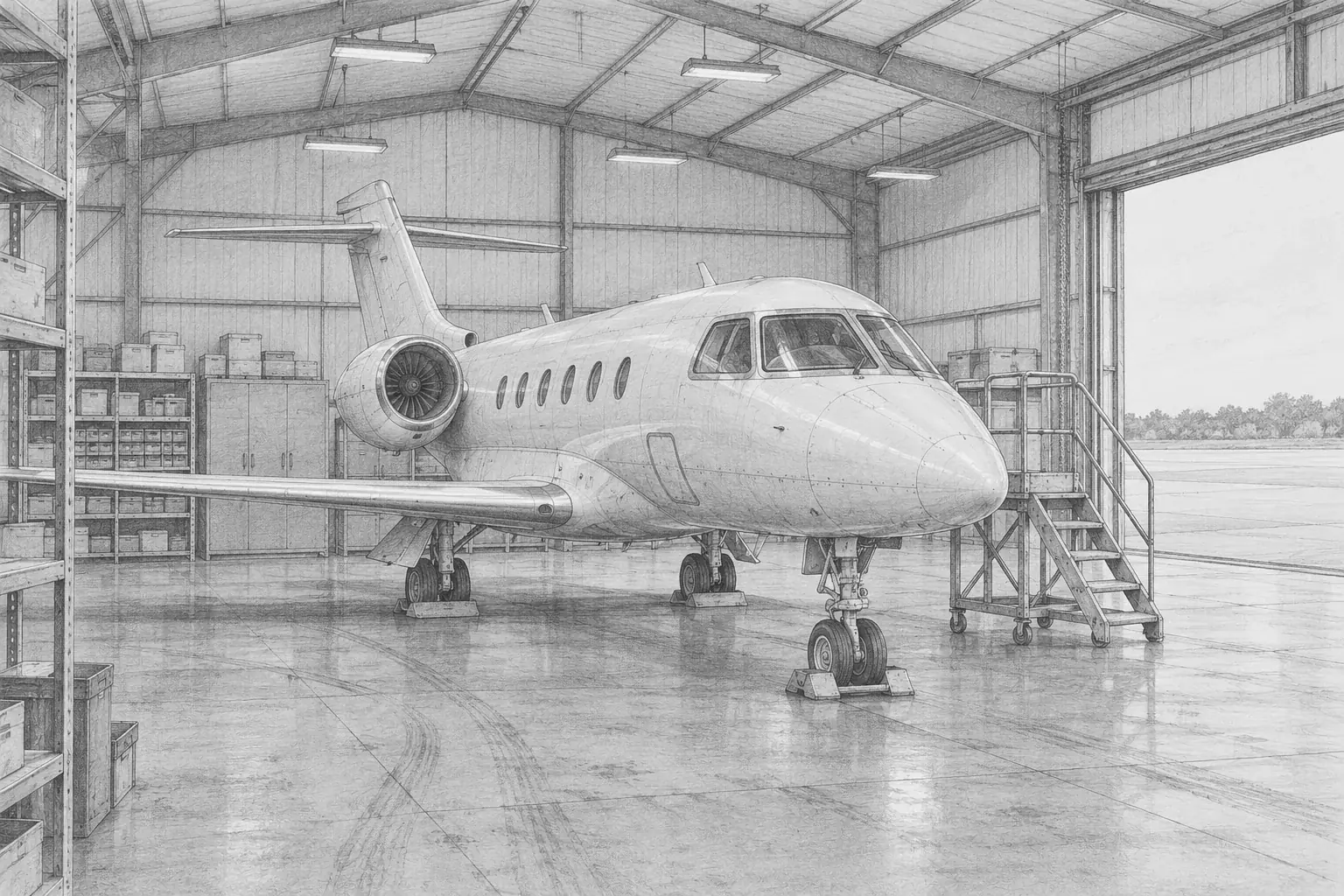
Janitorial services for aircraft hangars and aerospace maintenance buildings: bay floors kept bright and clear of loose hardware, shops, offices and crew rooms cleaned on their own cycle, and overhead dusting from lifts.
Hangar janitorial services from the bay to the break room
Loom Janitorial cleans aircraft hangars and aerospace maintenance buildings for the facility, operations and maintenance managers who run them. One crew covers the bay floor, the shops and parts rooms, the offices and the crew rooms, and the hangar operator’s rules set where and when that crew works.
Under one hangar roof sit two very different kinds of space. The bay is a working floor where a dropped washer matters, and the offices, locker rooms and restrooms beside it need the same nightly care as any workplace. We keep both on one program, with one contact and one inspection report for the manager.
Rooms and surfaces on a hangar route
| Area | What Loom cleans | Usual timing |
|---|---|---|
| Maintenance and storage bay | Dry sweeping and dust mopping, loose debris picked up, auto-scrubbing where the operator allows it | When the bay is clear or in a window the maintenance lead sets |
| Shops and parts rooms | Floors, sinks, waste points and entry mats | After the shift, as the shop lead directs |
| Offices and records rooms | Desks, touchpoints, carpet and hard floors, trash and recycling | Nightly or on set weekdays |
| Crew rooms, locker rooms and restrooms | Fixtures cleaned, floors mopped, paper and soap restocked | Every service day |
| Trusses, lights and ductwork above the bay | High dusting from lifts | Periodic, with the floor below cleared |
| Entry doors and office windows | Low-rise glass, frames and door hardware | On a set rotation |
Restrooms can be restocked with our janitorial supplies or the hangar’s own stock, and periodic restroom work runs through our restroom deep cleaning.
Why we take such care with the bay floor
A hangar floor is meant to show what lands on it. Military hangar design criteria (UFC 4-211-01) call for a light-colored, reflective, fuel-resistant floor in the maintenance bay, typically light gray so small parts and foreign objects stand out, and a finish that is easy to clean for the same reason. The same criteria note that a reflective floor puts more light under the fuselage and wings.
Those criteria also point out that sand and dirt left on the floor act as an abrasive and dull many finishes. That is why grit comes up on every visit, before it is ground into the coating. Methods and products for the floor follow the coating maker’s instructions and the operator’s protocol, and larger scrubbing passes use the equipment described on our industrial cleaning page.
Loose hardware and the FOD containers
The FAA defines foreign object debris (FOD) as any object in an inappropriate place in the airport environment that could injure people or damage aircraft. Its FOD advisory circular, AC 150/5210-24A (February 2024), is guidance rather than a regulation, applied at the airport operator’s discretion. It describes clean-as-you-go as cleaning your surroundings before, during and after a shift, and suggests FOD containers in hangars and maintenance areas.
For maintenance work the circular says nuts, bolts, washers and safety wire should be accounted for and disposed of, and hand tools tracked. Our crews treat anything metal on the bay floor as the maintenance team’s business: it is set aside where the lead says, not swept into the trash, and FOD containers are emptied on the schedule the operator gives us.
Foam systems and fire equipment are off-limits
NFPA 409 sets the construction and fire protection rules for aircraft hangars. Inspecting, testing and servicing those systems is work for the owner and the fire protection firm it hires.
Cleaning crews keep clear of foam nozzles, detectors, pull stations and sprinkler heads, and never touch, test, reset or block any of them. The stakes are real: in surveys a 2022 Fire Protection Research Foundation report summarizes, 357 of 432 hangar foam discharges between 2004 and 2021 were accidental, and only 44 answered a fire. When the owner schedules a system test, bay visits move around it.
Spills, rinse water and the drains
EPA’s industrial stormwater fact sheet for air transportation facilities lists washwater from aircraft, vehicle and equipment washing as a pollutant source, and says such washwater is a non-stormwater discharge that an industrial stormwater permit does not cover. EPA recommends cleaning up leaks and spills with dry absorbents where possible, not hosing areas down, and never pouring liquid waste into floor drains, sinks or storm drains. In California, the Industrial General Permit bars non-stormwater discharges it does not authorize, and washwater is not on its authorized list.
On a Loom route the scrubber’s dirty water goes where the hangar operator directs, never to a storm drain, and any fuel or fluid spill is reported to the shop lead for the hangar’s own response. Floor drains, trench drains and oil-water separators belong to the owner and its contractors.
Dusting the structure above the aircraft
Dust settles on trusses, light fixtures, heaters and ductwork over the bay, and it eventually comes down on aircraft and parts. High dusting from lifts clears it on a periodic schedule, in a window when the floor below can be emptied or the work area barricaded.
OSHA’s rule for vehicle-mounted boom platforms (29 CFR 1910.67) requires any employer to test lift controls each day before use, allow only trained operators, and keep workers on the basket floor with fall protection attached to the boom or basket, never to the building. Where people below could be struck by falling objects, OSHA calls for head protection and a guarded or barricaded area. California’s Title 8 section 3648 adds that only authorized people may run an aerial device.
Hangars that sit on an airfield
A hangar that opens onto a ramp sits inside the airport’s own security and FOD rules. The airport operator decides who may cross onto the airfield, which badge or escort that takes, and where waste may travel. Our airport cleaning page explains how those access rules work. Trash from hangar ramps can collect in turf and blow back onto areas aircraft use, so liners are tied off and container lids kept shut.
We clean hangars, aerospace maintenance buildings and the offices beside them in Sacramento, Stockton, Fresno, Redding and Reno, along with the rest of Northern California and Nevada.
Visits timed to the maintenance board
Bay work fits around the aircraft, not the other way round. Floor passes are booked for the hours a bay is between jobs, while offices, crew rooms and restrooms stay on their nightly cycle. During the first weeks the supervisor walks the hangar with your lead more often and adjusts the task list to how the bay is really used.
For buildings that run more than one maintenance shift, a day porter keeps restrooms and break rooms stocked between night visits, and our guide to cleaning in round-the-clock buildings shows how visits are set by zone.
Request a hangar cleaning quote
Tell us about your hangar: bay size, the shops, offices and crew rooms around it, how often the bay is free, and whether overhead dusting belongs on the list. Loom carries insurance and bonding, its hangar crews are background-checked, and the owner receives a certificate of insurance. Request a quote and we will walk the hangar with your operations lead.
A few useful answers
Common questions
What does Loom clean inside an aircraft hangar?
The bay floor, shops and parts rooms, offices, crew rooms, locker rooms and restrooms, plus periodic high dusting of the trusses, lights and ductwork above the bay.
Will the cleaning crew touch our foam nozzles or detectors?
No. Crews keep clear of foam systems, detectors and sprinklers and never touch, test, reset or block them. The owner and its fire protection contractor look after that equipment.
Is the bay floor cleaned with water?
Grit comes up by dry sweeping and dust mopping first. Where the operator allows auto-scrubbing, the recovered water goes where the operator directs and never to a storm drain.
What do crews do with loose hardware on the bay floor?
It is set aside where the maintenance lead tells us, not thrown out, so the team can account for it.
Can the hangar, its shops and the office building share one contact?
Yes. One Loom contact runs every building on the program, with one inspection report that breaks out the bay, shops and offices.