
Industries
Semiconductor Cleanroom Cleaning Services
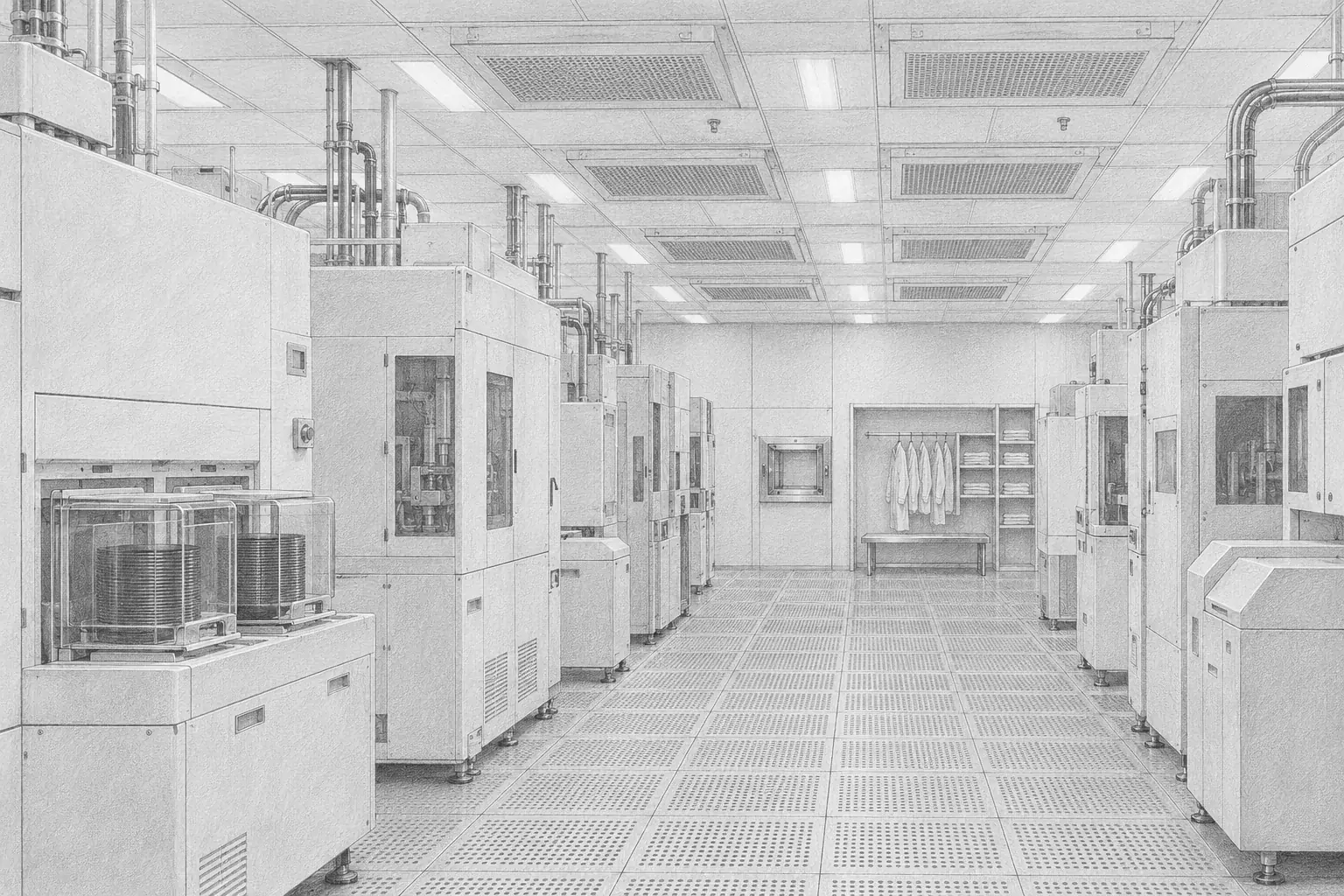
Cleaning for semiconductor fabs, electronics assembly areas and nanofabrication cleanrooms, plus the gowning rooms, corridors, service chases and offices around them, carried out to each facility’s written protocol.
Cleaning for chip fabs, electronics plants and the rooms around them
Loom Janitorial cleans semiconductor fabs, electronics assembly areas and university or research nanofabrication cleanrooms, together with the locker rooms, gowning rooms, corridors, service chases, offices and break rooms that surround them. Each program reports to the facility, cleanroom or EHS manager who runs the building.
Inside the controlled space, your written protocol and your cleanroom manager decide every step: gowning, banned items, cleaning agents, tools, wipe-down order and frequency. Outside it, offices and support rooms get recurring janitorial care. Our laboratory and cleanroom cleaning page covers research labs; this page adds what a fab brings.
The ISO class belongs to the room
ISO 14644-1:2015 classifies a cleanroom’s air by how many airborne particles it holds, counted with light-scattering particle counters at set locations, for particle sizes from 0.1 to 5 micrometres. The class describes the air, and the facility classifies and tests it. Older class names are still in use, and the FDA’s 2004 aseptic processing guidance lines them up with ISO classes by counting particles 0.5 micrometre and larger.
| Old class name | ISO class | Particles 0.5 µm and larger per cubic metre |
|---|---|---|
| Class 100 | ISO 5 | 3,520 |
| Class 1,000 | ISO 6 | 35,200 |
| Class 10,000 | ISO 7 | 352,000 |
| Class 100,000 | ISO 8 | 3,520,000 |
ISO 14644-5:2025 sets out an operations program, cleaning included, that keeps a cleanroom within its levels, but it leaves cleaning-agent compatibility and industry-specific rules to the facility and its suppliers.
Rooms on a fab cleaning program
| Room | What Loom cleans | Who sets the method |
|---|---|---|
| Locker and pre-gowning rooms | Floors, benches, locker fronts and waste | Facility protocol |
| Gowning rooms | Floors, benches and surfaces in the order posted | Cleanroom manager |
| Cleanroom bays | Ceiling-to-floor wipe-down with the facility’s agent and tools | Cleanroom manager |
| Corridors and service chases | Floors and surfaces at the cleanliness level each one holds | Facility protocol |
| Electronics assembly areas | Floors and waste points, inside the area’s static-control rules | Facility ESD program |
| Offices, break rooms and restrooms | Recurring janitorial cleaning and restocking | Loom task list |
Restrooms and break rooms can be restocked from our janitorial supplies or the building’s own stock.
Gowning, and what never goes inside
Published protocols show how strict entry gets. For example, NIST’s NanoFab safety manual has people pre-gown in the locker room with safety glasses, shoe covers, hair net, face mask and gloves, then put on the final gown from the top down, hood first, so nothing drags on the floor; it also discourages frequent trips in and out. Another published fab protocol, from NY CREATES, begins at a shoe-cleaning station and tacky mat and ends with a slow entry, and it says particles shed by people are the main concern in running a cleanroom.
The same NY CREATES protocol bars regular paper, cardboard, paper towels and tape, wooden-handled tools, hydrocarbon aerosol cans and scented products, requires tools dedicated to cleanroom use, and has approved items wiped down before entry. Crews bring in only what your protocol names, batch their work to limit entries, and leave street supplies outside.
Wipe-down order, agents and the log
In that published fab protocol, cleanroom staff under the cleanroom manager wipe each area at a set frequency using 10% IPA and 90% DI water. Cleaning moves from the cleaner end of the room, usually farthest from the pass-through, toward the pass-through and exit, and from the ceiling down to walls and windows, then equipment and tables, then the floor. Each pass is written in a log, and anything wrong is reported to the cleanroom manager for correction.
That is one facility’s method, not a rule for all of them. Loom’s crews use the agents, wipes and sequence your protocol sets, fill in your log the way you keep it, and leave process tools to their owners; in that protocol, cleaning on tools holding hazardous production materials needs a form approved by EHS ahead of time.
Static control in electronics areas
Static builds whenever two materials touch and separate. The ESD Association’s figures show a person walking on vinyl tile can build about 12,000 volts at 10-25% relative humidity and about 250 volts at 65-90%, and on carpet about 35,000 and 1,500 volts. ESD damage can be immediate or latent, leaving a part that works today and fails early.
An ESD protected area grounds people through a floor and footwear system, and a floor limits charge on carts only when their casters are conductive or dissipative. ANSI/ESD S20.20 sets the program, and the facility tests its own floors. The floor maker’s instructions and your ESD program decide what touches a static-control floor and what carts may roll on it, and floor work outside those areas follows our commercial floor care.
One schedule for the fab and its offices
Cleanroom bays run at the frequency your protocol sets, gowning rooms and chases on their own cycle, and offices, break rooms and restrooms on the nightly route. A day porter can keep break rooms and restrooms stocked for shift crews, so the cleanroom team is not pulled out of gowns for it.
Request a cleanroom cleaning quote
Send us your room list, the cleanliness level each room holds, the shifts it runs and your written cleaning protocol. Loom crews are background-checked, supervisors carry out quality inspections, and the facility receives a certificate of insurance. Request a quote and we will walk the building with your cleanroom manager.
A few useful answers
Common questions
Who decides how our cleanroom is cleaned?
Your facility. The written protocol and the cleanroom manager set the agents, tools, wipe-down order and frequency, and Loom’s crews work to them.
Can Loom use our wipes and IPA solution?
Yes. Crews use the cleaning agent, wipes and dedicated tools your protocol names, and nothing from outside the cleanroom.
Do your crews clean gowning rooms and service chases?
Yes. Gowning rooms, corridors and service chases each get their own cycle, cleaned at the level the facility sets for that space.
What does a static-control floor need from the cleaning crew?
Products and methods the floor maker and your ESD program allow. The facility tests the floor; crews keep to its rules on carts and footwear.
Can the fab’s offices and break rooms share a schedule with the cleanroom?
Yes. Offices, break rooms and restrooms run on the nightly route, and the cleanroom keeps the frequency its protocol sets, all under one Loom contact.