
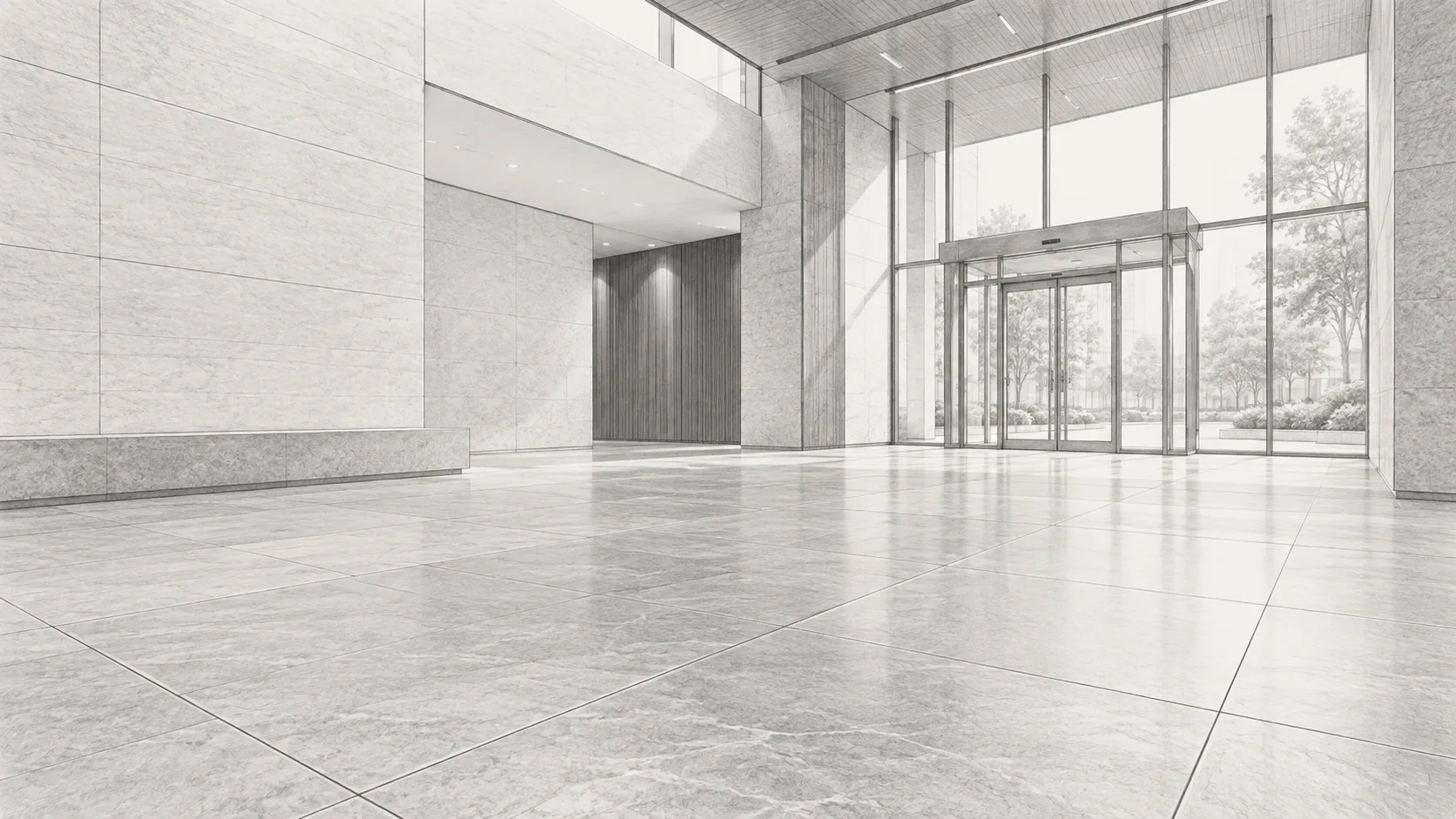
Commercial Floor Care for High-Traffic Facilities
Loom Janitorial cleans commercial floors and maintains compatible finishes with scrubbing, recoating, polishing, or burnishing.
Routine cleaning and periodic treatments
Vacuuming, sweeping, and mopping address everyday soil. Periodic hard floor work treats different needs in the existing surface or finish and is scheduled separately from those regular tasks.
Methods for the floor and its finish
The material and current finish determine which treatment fits. Recoating adds finish to an appropriate surface; polishing and burnishing are different processes and do not replace stripping and waxing.
Concrete and natural stone
We scrub compatible commercial concrete and provide cleaning and routine care for natural stone. Concrete polishing and stone restoration are outside these services.
Returning the floor to use
Allow treated floors to dry or cure before returning them to use. The treatment, floor condition, and ventilation determine the time needed.
Explore floor stripping and waxing, commercial carpet cleaning, and industrial cleaning. Find cleaning by industry, read about recurring janitorial services, or request a cleaning quote.
Frequently Asked Questions
How do you choose the right floor treatment?
We assess the material, existing finish, and surface condition before selecting a compatible method.
Is stripping and waxing included with every floor service?
No. It is a separate project for appropriate resilient or VCT flooring, rather than a treatment for every hard floor.
Can Loom scrub a commercial concrete floor?
Yes. We scrub compatible concrete to address surface soil after reviewing its condition and any coating.
Where does carpet cleaning fit with floor care?
Commercial carpet cleaning covers extraction and spot treatment. Those methods are separate from hard floor maintenance.
Does the same treatment fit every area in a mixed-floor building?
No. Each flooring material needs a compatible cleaning or finish-care method, even when the rooms share one property.