
Industries
College and University Janitorial Services
Janitorial services for college and university buildings: lecture halls, libraries, residence halls, unions and dining commons, rec centers, teaching labs and offices, scheduled around terms, finals and move-out.
For facilities, housing and auxiliary teams
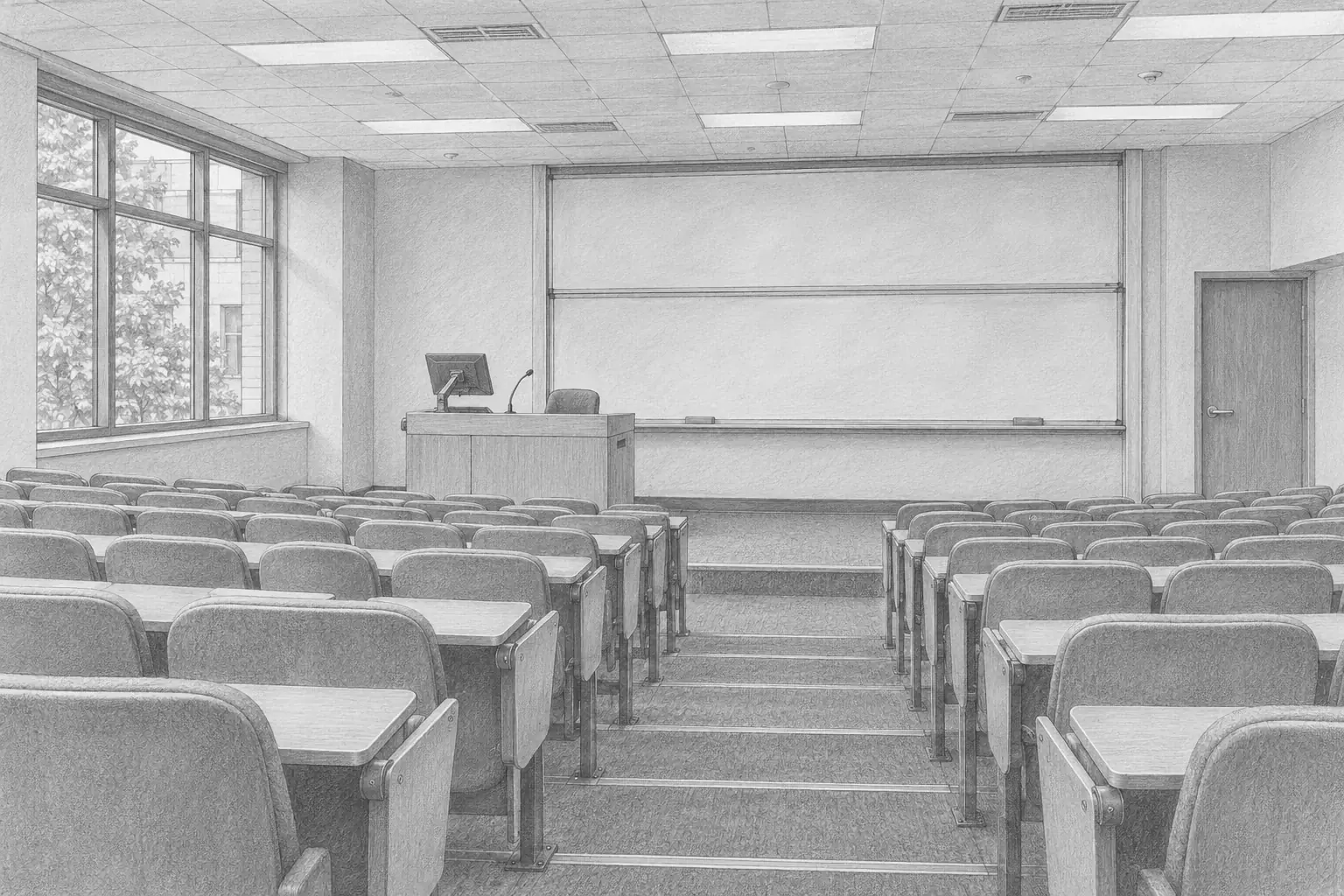
A campus is dozens of buildings with different hours, different owners and different ideas of what clean looks like. Loom Janitorial provides recurring janitorial services for college and university buildings: lecture halls and classrooms, libraries, residence halls, student unions and dining commons, recreation centers, teaching labs and administrative offices.
Facilities directors, custodial and housing managers and auxiliary services teams work with one Loom contact, a task list written for each building and supervisor quality inspections reported building by building. K-12 campuses run on a different calendar, and our school and daycare cleaning page covers them.
Campus buildings and what each one needs
Each building type gets its own task list, matched to how students and staff use the space. The table shows the usual work in each; your facilities department sets how often every line happens.
| Building | Usual work on each visit |
|---|---|
| Lecture halls and classrooms | Writing boards and their trays, desk and table tops, seating aisles swept or vacuumed, waste and recycling collected |
| Libraries | Reading tables, carrels and group study rooms wiped down, stack aisles and carpet vacuumed, entry floors and nearby restrooms kept up |
| Residence halls | Shared bathrooms, lounges, corridors and stairwells on a recurring round, with room resets when students move out |
| Student unions and dining commons | Dining rooms, tables, seating, lounges, waste stations, restrooms and floors |
| Recreation centers | Locker rooms, showers and restrooms, equipment touchpoints, mirrors, lobby and studio floors, as on our gym and fitness center page |
| Teaching labs | Waste, restocking and floors on the lab’s schedule, and any bench or equipment-area work done to the lab’s protocol |
| Administrative and department offices | Desks, conference rooms, break rooms, in-suite restrooms and carpet |
| Lobbies, stairwells and elevators | Door handles, stair rails, elevator buttons, drinking fountains and entry glass wiped, floors cleaned |
Frequencies differ widely from one campus to the next. As an example, one UC campus’s facilities page lists daily board, desk and floor work in its classrooms with dusting every two weeks, while a CSU campus guide has classroom floors swept or vacuumed on alternate days and dusting once a month. We follow the schedule your campus writes.
Academic, housing and auxiliary buildings on separate tracks
The office that owns a building decides how it is cleaned, so Loom can take on one group of buildings without the rest. On some campuses the central custodial department handles academic buildings while the union, housing, bookstore and dining run under another operator.
We keep each building group on its own schedule and its own inspection report. Housing sees its halls, the union sees its hours and event days, and academic facilities sees its classrooms and offices, without one group’s changes moving another’s visits.
APPA levels and the standard you pick
Your campus sets the standard each building is held to. Many campuses describe the result they want with the five custodial appearance levels published by APPA, the educational facilities association.
Level 1, orderly spotlessness, means bright floors with no build-up along walls, surfaces without dust or fingerprints, and gleaming, fully stocked restrooms. Level 2, ordinary tidiness, lets a day or two of dust and some close-up smudges show while restrooms stay at the Level 1 standard. Level 3, casual inattention, brings visible stains and corner build-up, and Levels 4 and 5 describe dingy and then neglected buildings.
APPA advises setting service levels with the people who use the buildings and defining them clearly enough that everyone knows what is cleaned and how often. Tell us the level or written standard for each building, and we set the task list and visit frequency around it, with supervisor inspections checked against that list. See how our quality inspections work.
The academic year, term by term
Campus cleaning follows the academic calendar. During the term, recurring visits keep classrooms, restrooms and common areas on their regular rhythm. Around finals, vacuuming and floor machines move away from libraries and study rooms while students fill them, since APPA notes that noisy equipment and dusting disrupt people in occupied rooms.
Move-out is the biggest single push in housing. Rooms, bathrooms, lounges, corridors and stairwells are reset once students leave, and when summer conference groups follow, crews keep the halls’ bathrooms, lounges and hallways clean while the guests stay.
Summer and winter breaks open the window for project work in empty academic buildings: floor stripping and waxing, restroom deep cleaning and window cleaning on interior glass and low-rise exteriors. A final pass through each hall and classroom building lands just ahead of move-in and the first day of classes.
Floors and carpet that take a full term
Corridors, stairwells and union floors carry more foot traffic than most office buildings see. Our commercial floor care keeps resilient floors scrubbed and recoated through the term, with full strip-and-wax projects saved for the breaks.
Loom offers hot-water extraction and spot treatment for commercial carpeting, which suits library reading rooms, residence hall corridors and office suites. We recommend booking carpet extraction for a weekend or a low-occupancy week so the carpet has time to dry. We set refinishing and carpet cycles building by building, from each building’s traffic and the standard your campus picks.
Extra cleaning for campus events
Events add work on top of routine service. One private university’s event policy lists when extra custodial help is needed: a refresh before the event, restroom and trash rounds while it runs, outside food vendors, a heavy cleanup before the next day’s routine service, and events after 5 pm or on weekends. It asks hosts to book at least a week ahead and to share the location, date, start and end times, headcount and the food being served.
Loom covers those same stages in unions, ballrooms, lecture halls and athletic buildings: a pre-event refresh, porters on restrooms and entries during the event, and a reset afterward so the routine crew starts the next day on schedule. Our event venue cleaning page shows how the three visits fit together.
Day porters in buildings that never empty
Unions, libraries and residence hall lobbies stay busy from morning to late evening. A day porter keeps restrooms stocked, lobbies tidy and spills handled while students are inside, and the full clean happens on the evening or late shift.
APPA names day, swing and late-night shifts as options and lists the trade-offs: daytime cleaning saves heating, cooling and lighting and keeps staff visible to fix problems quickly, while occupied rooms are harder to clean. We set the mix with your team building by building. Restrooms are restocked from our janitorial supplies or from the campus’s own stock.
CDC guidance (April 2024) asks for regular cleaning of high-touch points such as door handles, desks, stair rails, elevator buttons and restroom fixtures, with surfaces cleaned before they are disinfected. Where someone has been ill, our disinfection and sanitizing service adds targeted disinfecting.
Who holds the keys
The campus decides who carries keys and access cards, and which work needs a background check. Loom crews are background-checked, work under your key, card and alarm rules, and return credentials whenever the campus asks.
Campus key rules run into the details, such as keys issued only with facilities management’s authorization and an expiration date, one copy per key holder, and no loaning or duplicating. Our crews follow them as written.
The CSU’s systemwide background check policy, HR 2017-17 (December 2017), makes contractors responsible for checks on employees doing work the CSU designates as sensitive, and requires checks for anyone in regular contact with minors, including at campus-hosted camps. Your own policy tells us which buildings, keys and checks apply. Loom is insured and bonded, carries workers’ compensation, and provides the campus a certificate of insurance.
Teaching labs, clinics and chemical safety
A teaching lab’s own protocol decides what the crew cleans and how. Routine lab service can be simple: one UC campus’s schedule lists trash and recycling twice a week, daily restocking and weekly vacuuming, with bench tops and chemical materials handled as the lab directs. Our laboratory and cleanroom cleaning page explains how crews follow a lab’s products and sequence.
Campus clinic and exam rooms are cleaned to the clinic’s procedure. Crews who work in campus clinic spaces are trained in bloodborne-pathogen safety.
California’s hazard communication standard (8 CCR 5194), as of November 2026, requires a written program with a chemical list tied to Safety Data Sheets. Where more than one employer works in a building, that program spells out how each one tells the others about the hazardous chemicals its crews bring in or work around, and the sheets must be reachable on every shift, electronically or on paper. Our free SDS binder cover and index helps keep them in order.
Product choices follow your campus’s purchasing rules. The University of California’s Policy on Sustainable Practices, issued October 2026, strongly prefers functional alternatives to harmful products and gives at least 15% of solicitation evaluation points to sustainability. EPA’s Safer Choice label for cleaning products and its Design for the Environment logo for disinfectants are two marks campuses use; tell us which your purchasing office prefers.
Campus towns from Chico to Santa Barbara
We clean college and university buildings on campuses in and around Davis, Chico, Santa Cruz, San Luis Obispo, Santa Barbara and Reno, and across Northern California, the Central Valley, the Central Coast and Nevada.
Community colleges, universities and private colleges each get a schedule built around their own buildings and term dates.
Tell us about your campus
Send us the buildings you want covered, their square footage, the standard each should meet and your term dates. After a walk through the campus with your facilities contact, you get a written quote. Cost is set by building count, square footage, visit frequency, porter hours and the projects booked for breaks. Request a quote for your campus buildings.
A few useful answers
Common questions
Can we start with only the residence halls?
Yes. Housing can bring Loom in for its halls alone, with a term schedule and a separate push at move-out, and academic or union buildings can join later on their own schedules.
What does a residence hall reset include after move-out?
Rooms, shared bathrooms, lounges, corridors and stairwells are cleaned through, floors and carpet are treated, and restrooms are restocked, so the hall is ready for summer guests or the next move-in.
Will your crew work to the APPA level our campus uses?
Yes. Your campus chooses the level or written standard for each building, we set tasks and visit frequency around it, and supervisor inspections check the work against that list.
Can libraries stay quiet during finals?
Yes. Vacuuming and floor machine work shift to hours when reading rooms are empty, while restrooms and entries keep their regular visits.
Who supplies the restroom paper and soap?
Either side. Loom supplies and restocks toilet paper, paper towels, hand soap and liners, or crews restock from the campus supply room.
Do your cleaners work in teaching labs?
Yes. The lab’s protocol sets the surfaces, products and order the crew follows, and the corridors, offices and restrooms around the lab stay on the regular route.