
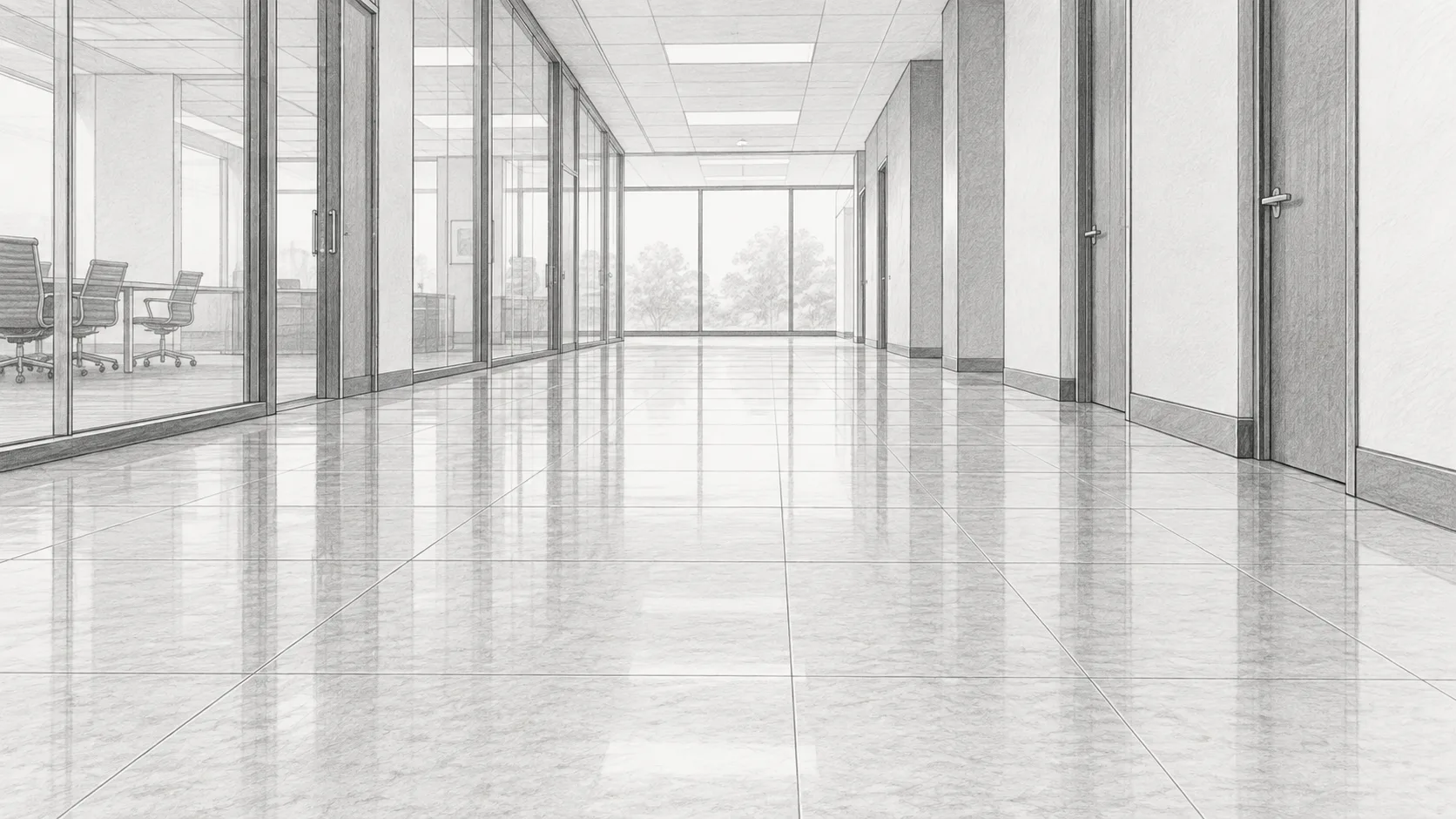
Commercial Floor Stripping and Waxing
Commercial floor stripping and waxing that brings back an even finish on yellowed, patchy VCT and resilient floors. Loom walks the floor with you and books the work for nights or weekends.
Removing the old finish
We strip worn finish down to the tile, lay fresh coats and book the work for nights or weekends so the floor cures before you reopen.
So how often should commercial floors be stripped and waxed? Whenever the finish is spent, not on a fixed date: once burnishing and a fresh recoat stop restoring the gloss, or the finish turns yellow or patchy. Entrances and corridors reach that point first, and a steady recoat schedule pushes each full strip further out, which keeps the yearly floor budget down. Our scrub and recoat versus full strip guide shows which treatment your floor is ready for.
Applying new finish
We prepare the compatible floor and apply new finish. The surface and product determine the application method and the time needed for drying or curing.
A separate project from recurring upkeep
Routine cleaning continues to address day-to-day soil. Recoating, polishing, and burnishing have different applications, so they remain distinct from a stripping and waxing project.
Nights and weekends
Book the project for a night or weekend, and the floor reopens once the finish has cured.
Resilient floors in schools, stores and offices
Resilient and VCT floors turn up in corridors, classrooms, break rooms and stockrooms, and their finish wears unevenly wherever foot traffic concentrates. Stripping and waxing resets the whole surface at once, so the worn lanes near entrances and counters match the rest of the room again.
Between projects, routine floor care and recoating help the new finish last. A school or daycare can plan the project for a break, and an office can book it for a weekend when nobody needs the rooms.
Strip or scrub and recoat: how often VCT needs each
VCT needs a full strip far less often than a scrub and recoat. No flooring maker sets a calendar date for stripping: Armstrong’s VCT instructions treat it as restorative work, due once scrubbing, recoating and burnishing stop bringing the floor back, and while three to five coats remain, burnishing alone can revive the gloss.
Between strips, a scrub and recoat takes the soiled top layer off with a medium pad and lays fresh coats over a sound base. One finish maker’s selection chart fits one to four of those recoats into each strip cycle on a well-kept floor. Recoating every room every time builds yellowed layers that scratch easily, so we recoat the traffic lanes and let quiet rooms wait. Our guide to scrub and recoat versus a full strip shows which one your floor is ready for.
Commercial floor stripping step by step
A strip and refinish runs in the same order on every resilient floor, set by the tile and finish makers’ instructions. The room stays closed with wet-floor signs up the whole time, because stripping solution turns tile very slippery.
Commercial floor waxing: which floors take a finish
Commercial floor waxing belongs on VCT, the tile built to carry an applied finish; Armstrong calls for three to five coats after every strip. Luxury vinyl and urethane-coated sheet vinyl can take polish too, though Armstrong and Mannington both list it as optional.
Some floors never get a coat. Armstrong’s slip-retardant sheet takes no polish and no buffing, and Forbo warns that wet stripping can damage its Topshield pro linoleum. The Marble Institute of America cautions that wax and acrylic coatings on stone build a layer less durable than the stone itself, so marble keeps its shine through honing and polishing. Polished concrete gets its gloss from grinding the slab, and it is cleaned and burnished. Not sure which floor you have? Our hard floor types guide shows how to tell them apart.
Signs a floor is ready for stripping
A resilient floor is ready for stripping when burnishing no longer brings back the shine, the finish has yellowed or clouded, or dark traffic lanes stay visible after scrubbing. Soil trapped between old layers of finish is another sign, because recoating over it only seals the dirt in.
Before that point, regular recoating and burnishing stretch the life of the existing finish. The commercial floor care page explains how those lighter treatments fit between full stripping projects.
How the project day runs
Clear movable items from the rooms being treated and name the spaces that must reopen first, so those are finished earliest. Large floors can be worked section by section over several nights, which keeps part of a store, school or office in use while another section dries.
Retail centers in San Jose and Elk Grove, school corridors and distribution offices in Stockton all run on resilient tile that wears fastest at entrances and counters. Each project is quoted from the floor material, its condition and the area treated, and our pricing guide shows why it sits on its own line.
What floor stripping and waxing costs
A 2,400-square-foot VCT sales floor in Modesto, stripped down and given fresh coats of finish at $0.80 a square foot, is a $1,920 project. That rate sits inside the usual band across Loom’s service area of $0.41 to $1.00 per square foot, with a minimum charge for each visit; Nevada jobs price toward the bottom and Bay Area jobs toward the top. Large, open floors with light build-up start around $0.32, and small rooms, heavy build-up or detailed edges can reach $3.00. Those are 2026 figures from published market data, and a look at your floor sets the price.
Size changes the math more than people expect. Big, uninterrupted floors in a school corridor or a store let the machines run in long passes, so the rate per foot drops. A single 300-square-foot breakroom, on the other hand, usually falls under the visit minimum rather than the per-foot rate, which is why small rooms are often grouped into one project day.
Price climbs with the number of old coats to remove, finish that has yellowed or been patched, baseboards and corners that need hand work, and furniture or fixtures that have to be moved and returned. Drying and curing time matter too: a floor that has to be ready by morning means an overnight crew, and weekend work costs more than a weekday evening. Stretching the interval between strips with recoating and burnishing keeps the yearly cost down. Each floor is assessed before the project is booked, and the quote names the coats, the drying time and the price.
Frequently asked questions
Which flooring is suitable for stripping and waxing?
Appropriate resilient and VCT flooring can receive this treatment after its material, finish, and condition are assessed.
Does stripping and waxing replace routine floor cleaning?
No. The project renews the finish treatment; recurring cleaning still addresses soil from everyday use.
What details help with a stripping and waxing quote?
Start with the floor material, its condition, and the area needing treatment.
Is stripping and waxing the same as recoating or burnishing?
No. Burnishing polishes the existing finish to bring back its shine, recoating adds a fresh coat on top of it, and stripping removes all of the old finish so new coats go down on a clean floor.
When can a treated floor return to use?
Once the new finish has cured. Tell us which rooms you need back first, and we schedule the work in that order.
Can stripping and waxing be done over a weekend?
Yes. Projects can be booked for off-hours or weekends, and the floor reopens once the finish has dried or cured.
How many scrub-and-recoats fit between full strips?
One to four on a well-kept floor, according to one finish maker’s selection chart, when the floor also gets regular dust mopping, damp mopping and burnishing. Entry mats and a steady recoat rhythm stretch the cycle, while heavy grit, skipped upkeep or yellowed layers bring the next strip forward. We set your cycle from the traffic lanes.
Can natural stone or rubber floors be waxed?
No. Marble is cleaned with pH-neutral stone products and restored by honing and polishing, since the Marble Institute of America warns that wax and acrylic coatings form a layer less durable than the stone. Rubber follows its maker’s scrub-and-rinse routine, with no finish anywhere in the steps. VCT is the floor built for wax.
How often do high-traffic commercial floors need a strip and wax?
Traffic decides. Entrances and corridors wear through faster than quiet rooms, and regular burnishing and recoating lengthen the time between full stripping projects.
Can a large floor be stripped and waxed one section at a time?
Yes. Large floors can be treated room by room over several nights, so part of the building stays open while another section dries.
Quoted room by room, site by site
Name your offices, clinics, warehouses or stores and the rooms in each, and we price every one.