
Services
Commercial Pressure Washing Across Northern California and Reno
Loom Janitorial provides commercial pressure washing for the hard surfaces around your building: entries and sidewalks, storefront walkways, parking structure stairwells, dumpster enclosures, loading docks and drive-through lanes, washed at the quiet hours when nobody needs to walk through.
What commercial pressure washing covers
Commercial pressure washing is a hot or cold water wash of the concrete, pavers and masonry outside a business, aimed at the grime, gum, drips and spills a broom leaves behind. Your nightly crew keeps the inside spotless; this service gives the outside the same attention, so the walk from the curb to your door matches the polished lobby waiting inside.
Loom washes the surfaces customers and tenants actually cross or notice. That means front entries and sidewalks, storefront walkways and the concrete under benches and planters, stairwells and landings in parking structures, dumpster enclosures and the pads they sit on, loading docks and truck aprons, and the lanes and menu-board areas of drive-throughs. Each surface goes onto your schedule with its own wash cycle, so busy areas get more frequent attention and quiet ones are not over-washed.
Entries, sidewalks and storefront walkways
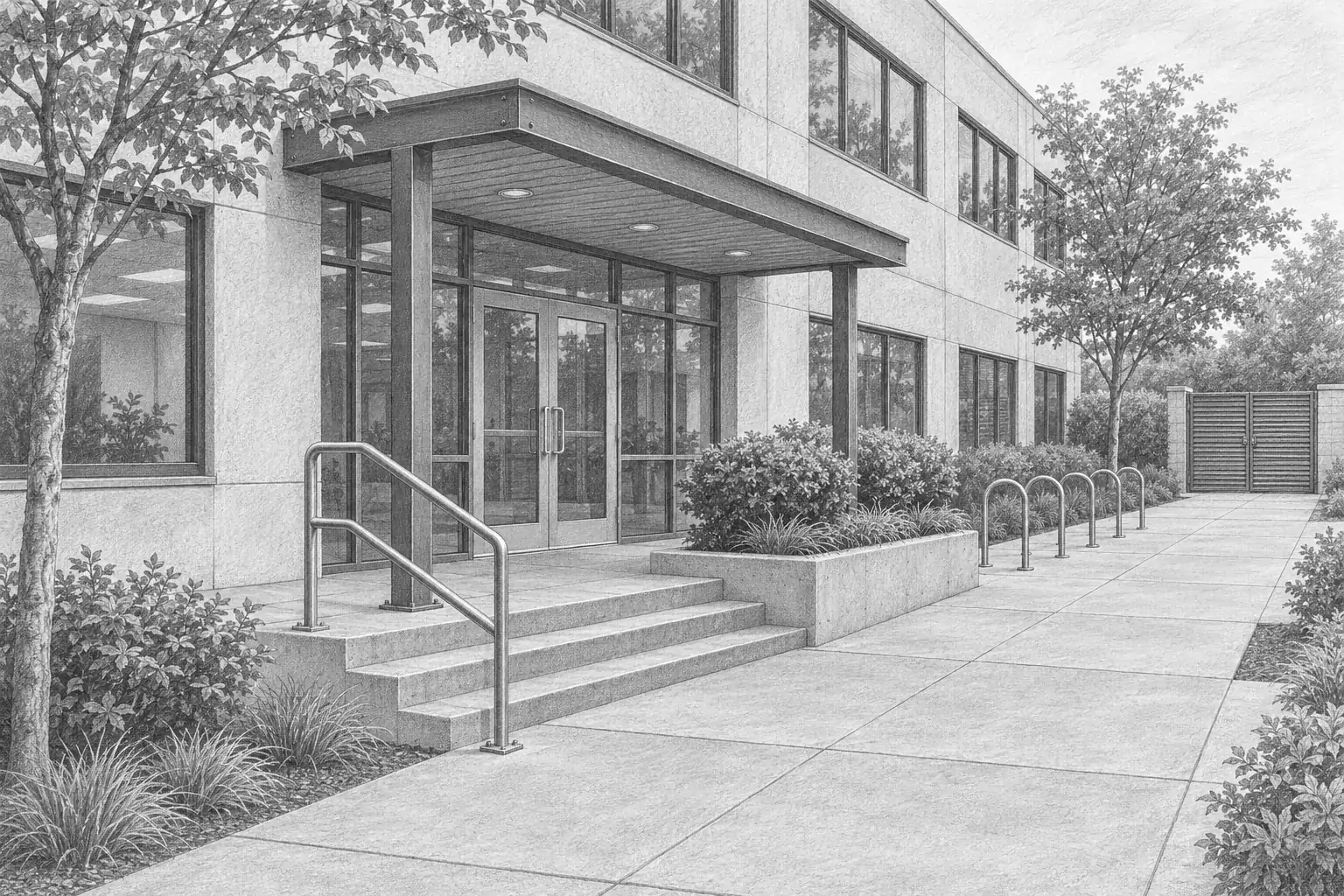
The entry is where pressure washing for businesses pays off first. Coffee drips, tracked-in dirt, bird droppings and dark traffic lanes build up in the few feet in front of every door, and visitors see that patch before they see anything else.
Sidewalk and storefront pressure washing covers the walk from the parking lot or street to the door, the apron in front of display windows, ramps, curb cuts and the area around outdoor seating. Litter and loose debris are picked up and swept first, then the surface is washed edge to edge and rinsed so the concrete dries to one even color instead of showing clean stripes beside dirty ones.
Dumpster pad cleaning, loading docks and drive-throughs
Dumpster pad cleaning removes the sticky residue, food waste and odor that collect under and around waste bins. Crews clear loose trash from the enclosure, treat the stained slab, and wash the pad, the enclosure walls and the gate area so the corner of the lot behind a restaurant or retail center stops drawing flies and complaints.
Loading docks and truck aprons collect tire marks, pallet debris, fluid drips and the dust that blows in with every delivery. Washing the dock face, the apron and the walkways beside them keeps footing better for the people moving freight, and it pairs naturally with the warehouse work on our industrial cleaning page. Drive-through lanes get the same treatment around the menu board, the pickup window and the curbs where spilled drinks and food land all day.
Parking structure stairwells and shared walkways
Parking structure stairwells are often the dirtiest public space a property has. Landings collect litter, spilled drinks and grime that ends up tracked into elevators and lobbies. A periodic wash of the treads, landings and the walls beside them resets the stairwell between regular sweeps.
For office parks, multi-tenant retail and apartment communities, the same visit can take in courtyards, breezeways, trash rooms with exterior access and the paths between buildings. Property teams managing several sites can put them on one route through our commercial cleaning for property managers.
Gum, oil and stain treatment
Pressure alone rarely lifts chewing gum or oil from concrete, so stains get their own step. Hot water softens gum so it releases from the surface, and each piece is treated individually before the general wash goes over the area.
Oil and fluid drips are first covered with absorbent and swept up dry, then treated with a degreaser and worked in before rinsing. Rust marks, tannin stains from leaves and the dark rings under planters each get a matched spot treatment. Fresh stains respond best, which is one more reason to keep high-traffic areas on a steady cycle rather than waiting for a once-a-year wash.
Commercial power washing at low-traffic hours
Commercial power washing works best when the surface is empty, so the work is set for the hours your property is quietest. Storefronts and restaurants are usually washed early in the morning before opening or after closing, office entries in the evening, and parking structures and loading areas overnight or on a weekend.
Washed areas are coned off while the crew works, and entries are done in sections so at least one path to the door stays open and dry. Wet surfaces get time to dry before the first customers, deliveries or tenants arrive.
How often each surface needs a wash
How often a surface needs washing comes down to foot traffic, food and drink spills, and weather. As a starting point:
- Restaurant entries, drive-through lanes and dumpster pads: weekly to monthly, since food waste and spills build up fastest.
- Retail entries and storefront walkways: monthly, or every other week at busy centers.
- Office building entries and sidewalks: monthly to quarterly.
- Parking structure stairwells and landings: monthly to quarterly, by how heavily they are used.
- Loading docks and truck aprons: quarterly, with extra washes after spills.
The walkthrough sets the real cycle for each area, and a one-time wash before a grand opening, a property sale or an inspection can go on the calendar at any point.
Keeping wash water out of storm drains
In California, wash water has to stay out of storm drains. Those drains are built for rain, and in Napa County, for example, every street storm drain flows to creeks and other waterways with no treatment. Cities and counties run stormwater programs under permits from the Regional Water Quality Control Boards, and San Mateo County’s program states plainly that wash water must not be allowed to flow into storm drains, streets, gutters or parking lots. It adds that wash and rinse water can usually go to the sanitary sewer through an on-site drain, with the property owner’s permission and the local treatment plant’s requirements.
That is how Loom crews work on every job. Before washing, the crew walks the site and finds each storm drain inlet near the work area, sweeps up litter and loose debris, and uses absorbent on oil drips so they come up dry. Drain inlets are protected, water use is kept to what the surface needs, and rinse water is directed away from the street and gutter, onto planted beds or into a sanitary drain where the property and the local rules allow it.
Getting pressure washing on your schedule
A Loom supervisor walks the property with you, notes each surface, the stains that need treatment, the water access and the hours that work for your business, and writes the washing into your quote alongside any janitorial service you already have. Price follows the area to be washed, the surface type, how much gum and staining there is, how easy the area is to reach, and the time of day.
Request a quote and tell us about your property, the areas you want washed and when your entries are quietest, and we will put commercial pressure washing on a cycle that keeps the outside of your building looking as good as the inside.
Common questions
What surfaces does commercial pressure washing cover?
Entries and sidewalks, storefront walkways, parking structure stairwells, dumpster enclosures and pads, loading docks and drive-through lanes are the usual list. Courtyards, breezeways and paths between buildings can join the same visit, and each area gets its own wash cycle on your schedule.
When do you pressure wash a business property?
At the quietest hours for your site: before opening or after closing for stores and restaurants, evenings for offices, and overnight or weekends for parking structures and docks. Work areas are coned off, and entries are washed in sections so one path stays open.
Can you remove chewing gum from sidewalks?
Yes. Gum gets its own treatment before the main wash: hot water softens each piece so it releases from the concrete. Keeping busy entries on a regular cycle stops gum and fresh stains from building up and setting into the surface between visits.
How often should a dumpster pad be cleaned?
Weekly to monthly for restaurants and food businesses, where food waste and liquids collect fastest, and monthly to quarterly for offices and retail. Regular dumpster pad cleaning keeps odor and pests down and stops residue from tracking across the rest of the lot.
What happens to the wash water?
It stays out of storm drains. Crews locate nearby drain inlets before starting, sweep up debris, put absorbent on oil spots, protect the inlets and direct rinse water onto planted beds or into a sanitary drain where the property and local rules allow.
Quoted room by room, site by site
Name your offices, clinics, warehouses or stores and the rooms in each, and we price every one.