
Resources
Common Area Cleaning: Lobbies, Elevator Cabs and Stairwells
Common areas are the part of a shared building every tenant and visitor walks through. Here is what gets cleaned in the lobby, elevator cabs, stairwells and corridors, and how often each one usually needs it.
The rooms nobody rents but everybody sees
In an office or mixed-use building with several tenants, each suite answers to its own occupant. The lobby, elevators, stairs, corridors and shared restrooms answer to the property manager, and they shape how every tenant feels about the building. A tenant can run a spotless suite and still lose a client’s good opinion in a lobby with smeared doors and a gritty elevator floor.
Common areas also behave differently from suites. Traffic arrives in waves at the start of the day, at lunch and at five o’clock, weather comes in through one set of doors, and move-ins and deliveries scuff the same routes again and again. That is why these spaces deserve their own task list and their own frequencies rather than being folded into a general office program.
The lobby: a full reset every night
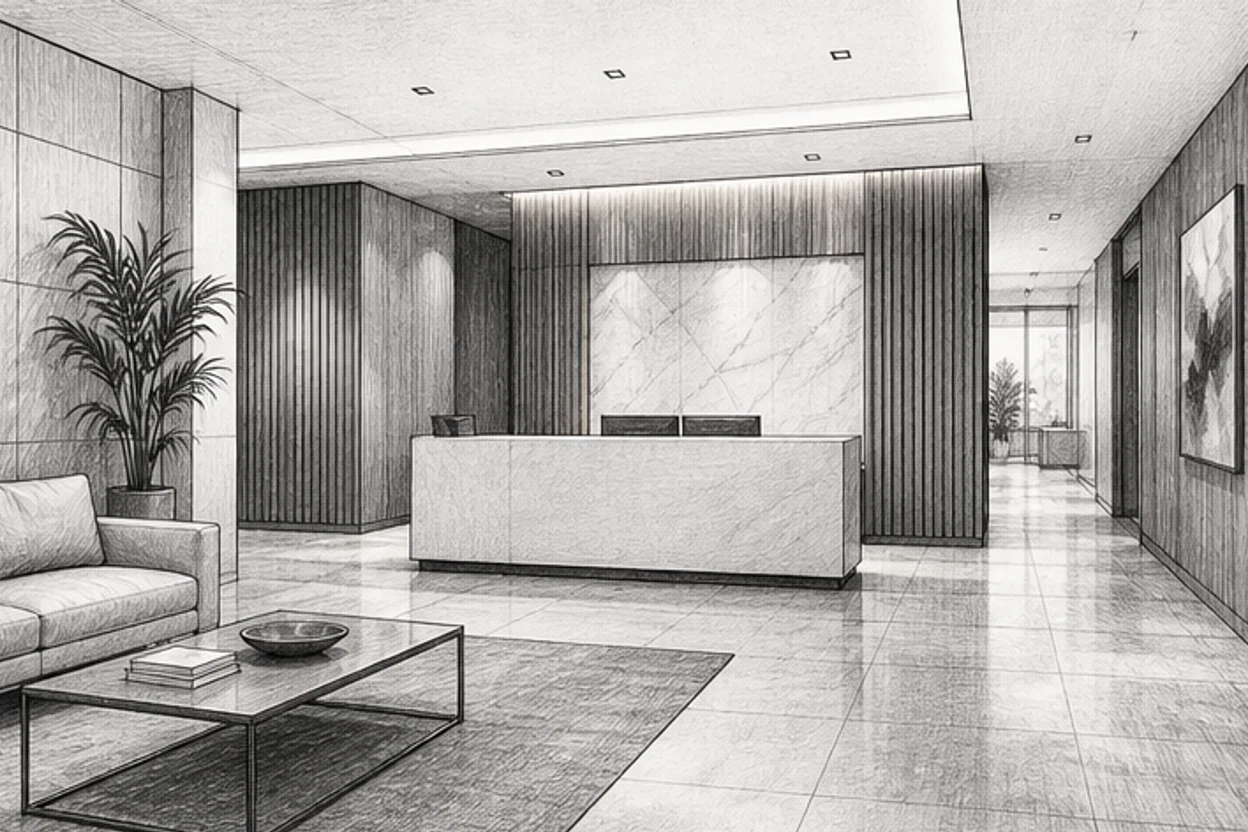
The lobby carries the highest expectations, so its nightly list is long. Entry doors and sidelights are cleaned on both faces, push bars and handles included. Entrance mats get vacuumed, then lifted so the grit trapped beneath them can be cleared away. The floor is dust mopped and then damp mopped or auto-scrubbed for tile and stone, or vacuumed edge to edge for carpet.
Above the floor, crews wipe the reception or security desk, seating, side tables, planters, the tenant directory and signage, and the trash and ash receptacles by the door. Mailrooms and package areas off the lobby are swept and their counters cleaned, since cardboard dust and packing debris pile up fast there. Wall-mounted mailboxes and parcel lockers get their fronts wiped too, because tenants and their staff touch them several times a week and fingerprints show on the metal.
In a busy building, one nightly reset is not enough to carry the lobby through the day. A daytime porter round handles fingerprints on the entry glass, spills by the coffee kiosk, wet mats on rainy mornings and trash cans that fill before noon.
Elevator cabs and landings
An elevator cab is a small room with a lot of hands in it. Each night the call buttons inside and out, the door edges, handrails and wall panels are cleaned. Stainless steel is wiped with the grain using a cleaner made for it, never an abrasive pad, so it does not scratch or streak. Mirrored or glass panels are cleaned without drips running into the joints.
The floor gets the most attention. Grit collects in the door sill tracks at every stop, so the tracks are vacuumed nightly and the cab floor is cleaned according to its surface: vacuumed if it is carpet, damp mopped if it is tile or vinyl. The landing on each floor is part of the same task, since its threshold and call panel see the same traffic.
Weekly or monthly, the higher parts of the cab get attention: ceiling panels, light diffusers and the top of the handrail brackets. During tenant move-ins, protective wall pads keep the panels from denting and keep cleaning time down afterward.
Stairwells: quiet most days, but noticed
In most office buildings the stairs see light use, mainly as a short cut between neighboring floors or a fire exit. A weekly sweep or dust mop of treads and landings is the usual starting point, with a damp mop monthly. Where staff use the stairs every day, for example between two floors of the same tenant, the treads and handrails move to a few times a week.
Handrails deserve more frequent attention than the floor in any case, because nearly everyone who uses the stairs holds one. Crews also wipe scuffs from the walls at landing height, clean the glass on stairwell doors, pick up litter and note any lights that are out. Before leaving, the crew closes each stairwell door fully behind it. Anything stored on a landing gets reported to the property manager, because an exit route is no place for storage.
Corridors and the spaces in between
Corridors connect the suites to everything else. Carpeted corridors get the traffic lanes vacuumed nightly and the edges detailed weekly, while hard-floor corridors are dust mopped and spot mopped. Drinking fountains and bottle fillers are cleaned and polished, and the door frames of each suite are wiped where hands push them open.
Shared restrooms on each floor follow the same pattern as the lobby: a full clean every night, plus midday checks in buildings with heavy occupancy. Back-of-house spaces belong on the list too, including trash and recycling rooms, the loading dock entrance and the elevator lobbies in the parking garage, which tenants walk through more often than you might expect. A dirty garage elevator lobby is often the first thing a tenant sees in the morning, long before the main entrance.
Matching the frequency to your building
A typical multi-tenant office building starts with something like this and adjusts from there:
- Lobby and entry glass: every night, plus daytime touch-ups when traffic is steady.
- Elevator cabs and sill tracks: every night.
- Shared restrooms: every night, with midday checks on busy floors.
- Corridors: traffic lanes nightly, edges weekly.
- Stairwells: weekly sweep, more often for handrails or stairs in daily use.
- Lobby floor care: periodic scrubbing, recoating or polishing on its own schedule.
Revisit the list when the building changes. A new tenant with a lot of visitors, a rainy season, a construction project on one floor or an increase in move-ins all push certain areas up a level. Hard floor care in the lobby, such as scrubbing and refinishing, is best handled as periodic work so it can be booked for a weekend.
Keep common areas on their own page
Write the common-area tasks as a separate list from the tenant suites, even when the same crew cleans both. That way the property manager sees exactly what the building pays for, tenants know which complaints go to their own vendor and which go to management, and nobody wonders whether the elevator was anyone’s job.
The same split works for checking quality. Our supervisors inspect shared lobbies, corridors and restrooms as their own line during quality inspections, apart from the suites, so you can see how the public spaces are holding up. For buildings that need attention during the day, a day porter covers the lobby and restrooms between nightly visits. To set up common-area cleaning for your building, request a quote from Loom Janitorial.
A few useful answers
Common questions
How often does an elevator cab need a full clean?
In an office building, every night: buttons, doors, handrails, panels and floor, with the door sill tracks vacuumed so grit does not build up. Ceiling panels and light diffusers inside the cab are usually done weekly or monthly.
What is the best way to clean stainless steel elevator walls?
Wipe with the grain using a stainless steel cleaner and a soft cloth, then buff dry. Abrasive pads, bleach and general-purpose sprays leave scratches or streaks that show under cab lighting.
Who is responsible for common area cleaning in a multi-tenant building?
Usually the property owner or manager, who contracts cleaning for the lobby, elevators, stairs, corridors and shared restrooms. Tenants arrange cleaning for their own suites, following whatever split the lease sets out.
Do stairwells need cleaning if hardly anyone uses them?
Yes, though less often. Dust, litter and cobwebs still collect, and handrails get touched by everyone who does use them. A weekly sweep with regular handrail wiping keeps them presentable.
Can the same crew clean both the common areas and our suites?
Yes. We clean common areas and tenant suites under separate task lists, so the property manager and each tenant can see their own work and inspection results.