
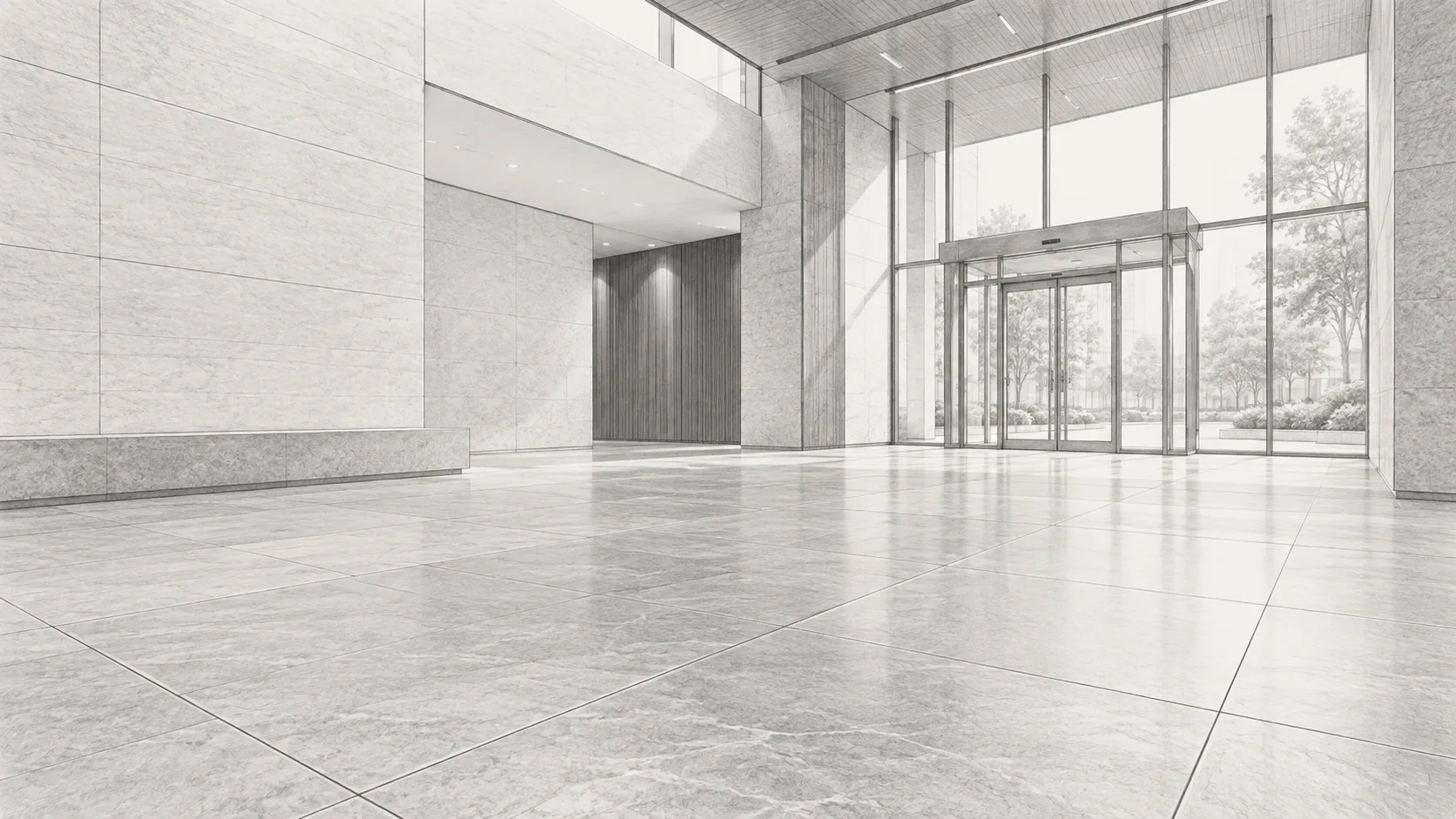
- Commercial Floor Care for Compatible Surfaces
Commercial Floor Care for High-Traffic Facilities
Commercial floor care combines routine janitorial upkeep with separately selected periodic methods for compatible surfaces. Flooring material, finish, condition, traffic, and occupancy help determine which type of care fits the facility.
Separate routine upkeep from periodic floor care
Routine janitorial upkeep addresses included floors and surfaces. Periodic floor care is selected separately because scrubbing, recoating, polishing, burnishing, and stripping are distinct services with different compatibility considerations. Waxing is distinct services with different compatibility considerations.
Match floor care to site conditions
Conditions within a commercial facility shape the floor care approach. Traffic patterns, occupied areas, access restrictions, and the current surface condition help plan which compatible method is appropriate.
Understand the floor care coverage
Commercial floor care can address compatible hard flooring and finishes after the surface is assessed. Concrete service covers only compatible-surface scrubbing, polishing, grinding, sealing, and coating are outside this service. Repair is outside this service. Restoration is also not included.
Select methods for compatible surfaces
Material, finish, current condition, affected area, and prior treatment information help distinguish suitable methods. Each process is considered on its own rather than treated as interchangeable with another type of floor care.
Account for access and operating conditions
Access, occupancy, ventilation, product requirements, and the selected method affect service timing. Drying, curing, reopening, and maintenance intervals remain specific to the surface and facility conditions.
Keep related floor services distinct
Routine floor upkeep can remain part of commercial janitorial service, while periodic hard floor care is handled separately. Carpet extraction and spot treatment belong under commercial carpet cleaning rather than hard floor maintenance.
Separate Routine Upkeep from Periodic Floor Care
Routine janitorial upkeep covers included floors and surfaces. Periodic work is scoped separately because flooring, finish, condition, traffic, and occupancy determine the method. Scrubbing, recoating, polishing, burnishing, and stripping and waxing are distinct services. Carpet extraction and spot treatment belong under commercial carpet cleaning.
Assess the Surface Before Selecting a Method
A floor-care review identifies the material, finish, condition, traffic, access, occupancy, and drying limits. Concrete service here means compatible-surface scrubbing, not polishing, grinding, sealing, coating, repair, or restoration. Natural-stone work is limited to compatible cleaning and routine care. The site and selected process determine timing and realistic results.
Frequently Asked Questions
Answers about the facility scope, service boundaries, and quote details.
How is routine floor upkeep different from periodic floor care?
Routine upkeep belongs within planned janitorial tasks. Periodic care uses separately selected methods based on the floor, finish, condition, traffic, access, and occupancy requirements.
What should be assessed before scrubbing, recoating, polishing, or burnishing?
Assess the floor material, finish, current condition, affected area, prior treatment information when available, traffic, access, occupancy, and relevant drying or curing constraints.
Why are stripping and waxing different from polishing and burnishing?
They are distinct processes with different compatibility and condition considerations. One process should not be substituted for another without reviewing the surface and finish.
Can commercial concrete floors be scrubbed?
Compatible commercial concrete surfaces may be considered for scrubbing after assessment. This does not include polishing, grinding, honing, sealing, coating, resurfacing, crack repair, remediation, or restoration.
How should service timing and drying or curing be discussed?
Discuss access, occupancy, ventilation, product requirements, surface condition, and the selected method. No fixed drying time, curing time, interval, or reopening time is promised.