
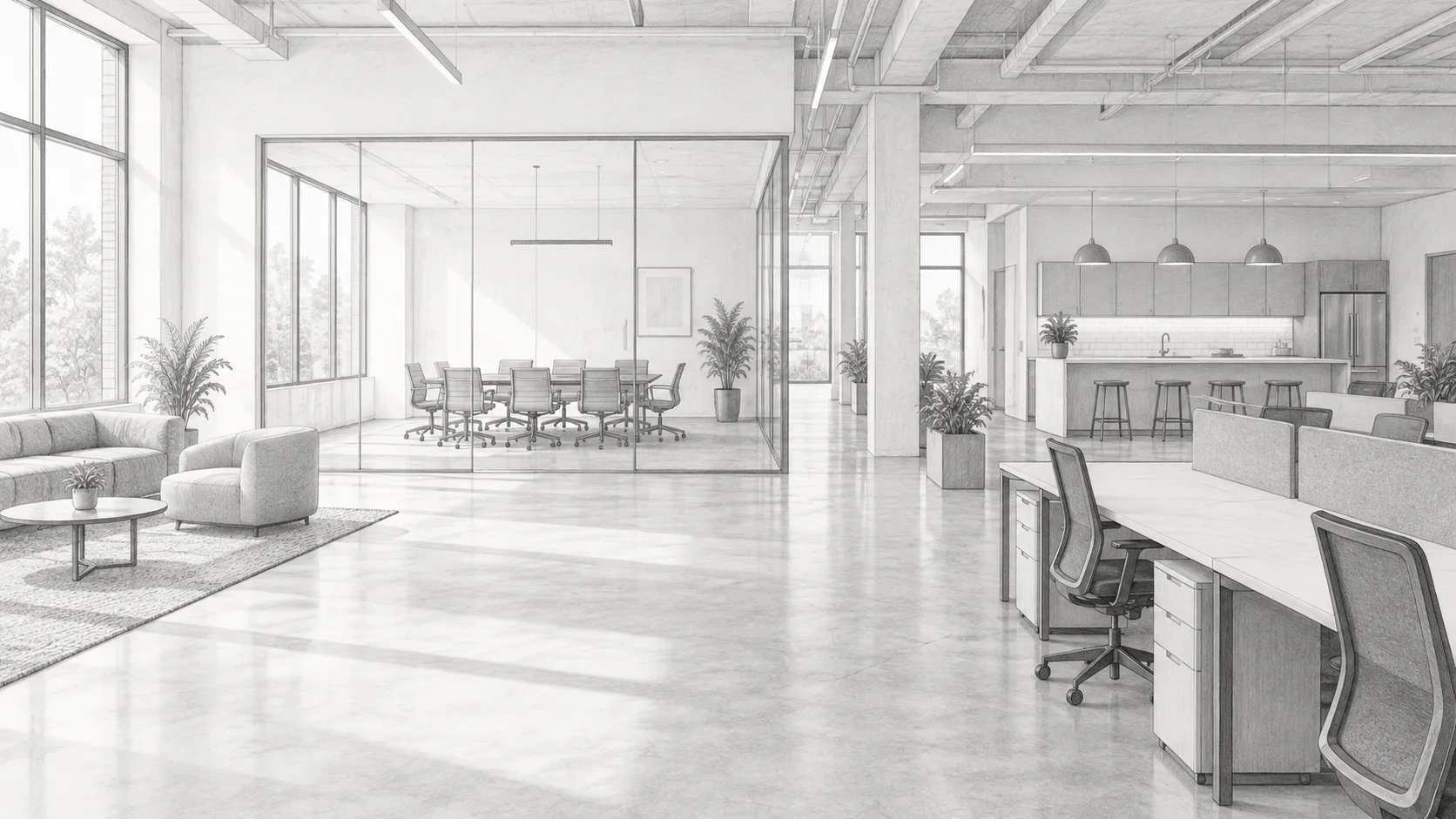
- Office Cleaning Guide
How Often Does an Office Need Cleaning?
There is no single office-cleaning frequency for every workplace. Compare how the building is actually used, identify where attention concentrates, and use a walkthrough to help translate those priorities into an included room-and-task schedule.
Office Cleaning Condition-to-Attention Matrix
| Building condition | Where attention may concentrate | Question to ask |
|---|---|---|
| Consistent occupied use | Spaces used throughout occupied periods may show demand sooner than lightly used areas. | Which zones change fastest under this facility’s actual use? |
| Uneven or changing occupancy | Attention may concentrate in the spaces that remain active rather than uniformly across the office. | Which spaces are used, and when? |
| Extended or staggered operating hours | Occupied areas and access limits may shape where and when work is practical. | Which service windows are workable with occupied hours and access? |
| Seasonal or changing soil conditions | Entries, traffic routes, and floor conditions may change as exterior conditions change. | Have relative needs changed under the current conditions? |
| Client-planned appearance expectations | The facility may identify spaces most important to its stated standard. | Which spaces matter most to that stated standard? |
Use conditions to set attention before setting a schedule
This informational guide provides a decision method rather than a universal timetable. Office Cleaning owns the service details, while the Janitorial Scope of Work guide explains how tasks and frequencies are documented.
A walkthrough can help translate the facility’s priorities into an included task schedule. Use the commercial cleaning pricing guide for the inputs that shape a quote.

A Four-Step Frequency Decision Method
Observe Actual Use
Look at how occupancy, visitors, shared spaces, and operating windows work in this office.
Find Concentration Points
Identify where use, soil, waste, or access conditions change faster than elsewhere.
Assign Relative Attention
Separate higher-attention, routine, and periodic needs without imposing a generic interval.
Document the Included tasks
Connect each priority to an area and task in the written service schedule.
Review Practical Access
Account for occupied hours, restricted spaces, and workable service windows.
Revisit Material Changes
Reassess the schedule when building use or facility expectations materially change.
Turn facility evidence into an included schedule
Relative attention helps organize the decision before exact tasks and service windows are documented.
01
Higher-Attention Needs
Use this label for areas whose actual conditions change sooner than the rest of the office.
02
Routine Needs
Use this label for recurring work that belongs in the included service program.
03
Periodic Needs
Separate project or detail work that does not belong in every recurring visit.
04
Included Schedule
Convert the selected priorities into specific areas, tasks, and service windows after the walkthrough.
Frequently Asked Questions
Decision-shaped answers without universal schedules or outcome claims.
Is there one recommended office-cleaning frequency?
No. The appropriate frequency depends on the office’s actual use, priority areas, access, and included tasks rather than one schedule for every workplace.
How should I use the condition-to-attention matrix?
Compare the building’s current conditions, identify where attention concentrates, and use those findings to discuss an included task schedule.
Does changing occupancy automatically mean less cleaning?
No. Changing occupancy does not automatically determine more or less cleaning; the facility should evaluate actual use by area before changing the schedule.
When should an office cleaning schedule be reviewed?
Review it when occupancy, facility use, access, or stated expectations materially change, then update the included areas and tasks as needed.
Continue to the Canonical Owner
Office Cleaning
Review Loom’s canonical office-cleaning service owner.
Janitorial Services
Review recurring facility-cleaning service.
Resources
Browse Loom’s other facility decision guides.
Contact Loom
Send the contact details Loom needs to respond.